An AI coding workflow that splits the work between two different agents is getting attention after a writer at XDA Developers walked through the process step by step, building a fake perfume brand's e-commerce site with Google Antigravity before handing the whole project to Claude Code for a redesign.
The experiment, published Tuesday, set out to test whether running two agents in sequence beats asking one to do everything. Google Antigravity is Google's AI-powered development environment, built to compete with tools like Cursor and VS Code equipped with Copilot. For this project it ran on Gemini 3.8.
The brief, according to the writer, was not a simple landing page. It called for a homepage, a full product catalog with filters and sorting, individual product pages, an interactive fragrance-finder quiz, a shopping cart and a simulated checkout, all built for a fictional perfume brand called Aurevi.
Antigravity does the heavy lifting
Gemini 3.8 inside Antigravity handled that entire build, and the writer described the typography, spacing and gradient choices as strong, singling out a "Shop by Mood" section with varied gradient backgrounds. The result wasn't flawless. Product photography looked unconvincing, and some smaller details didn't match what had been asked for. The writer put Antigravity's output at roughly 90% of the way to the intended finished product.
Rather than keep iterating inside Antigravity, the project was handed over whole to Claude Code, running on Anthropic's Opus 5.5 model, with instructions to act like an experienced frontend developer and designer with broad creative freedom. The brief asked it to improve the photography, fix spacing and visual hierarchy, polish animations and make the shopping experience feel more premium, while keeping the existing fragrance quiz, catalog, discovery sets and checkout flow intact.
Claude Code's changes went beyond cosmetic tweaks, per the writeup. It swapped out the original purple, cyan and pink palette for warm paper tones, ink shades and brass accents, and paired Instrument Serif headlines with Jost body text. The hero section was rebuilt to shift its background to match whichever of four featured perfumes was on screen, cycling between them with animation. Product cards, navigation, search and the cart were all redesigned, and product pages gained image galleries, fragrance timelines, a longevity meter and a sticky add-to-bag button for mobile. The writer also credited Claude Code with fixing responsiveness and accessibility issues left over from the first build.
Why the split workflow matters
The headline number for anyone working inside usage caps: the whole redesign consumed only around 35% of a typical Claude Code session's limit, according to the writer, because the heavy lifting of planning and initial development had already been absorbed by Antigravity.
That's the practical takeaway. Coding agents still burn through tokens fast when asked to plan, build and refine a project end to end. Using one tool for the rough build and a second, fresh agent for the finishing pass, without the first agent's assumptions baked in, left more headroom for the kind of detailed, iterative redesign work that tends to eat through limits fastest. Whether that pattern holds for real production sites rather than a one-off demo brand is the next thing worth testing.
ADFiled by The AI Desk
Models, assistants and the companies and chips behind them, reported from what was released and what was claimed, with the difference kept clear.
More from this desk →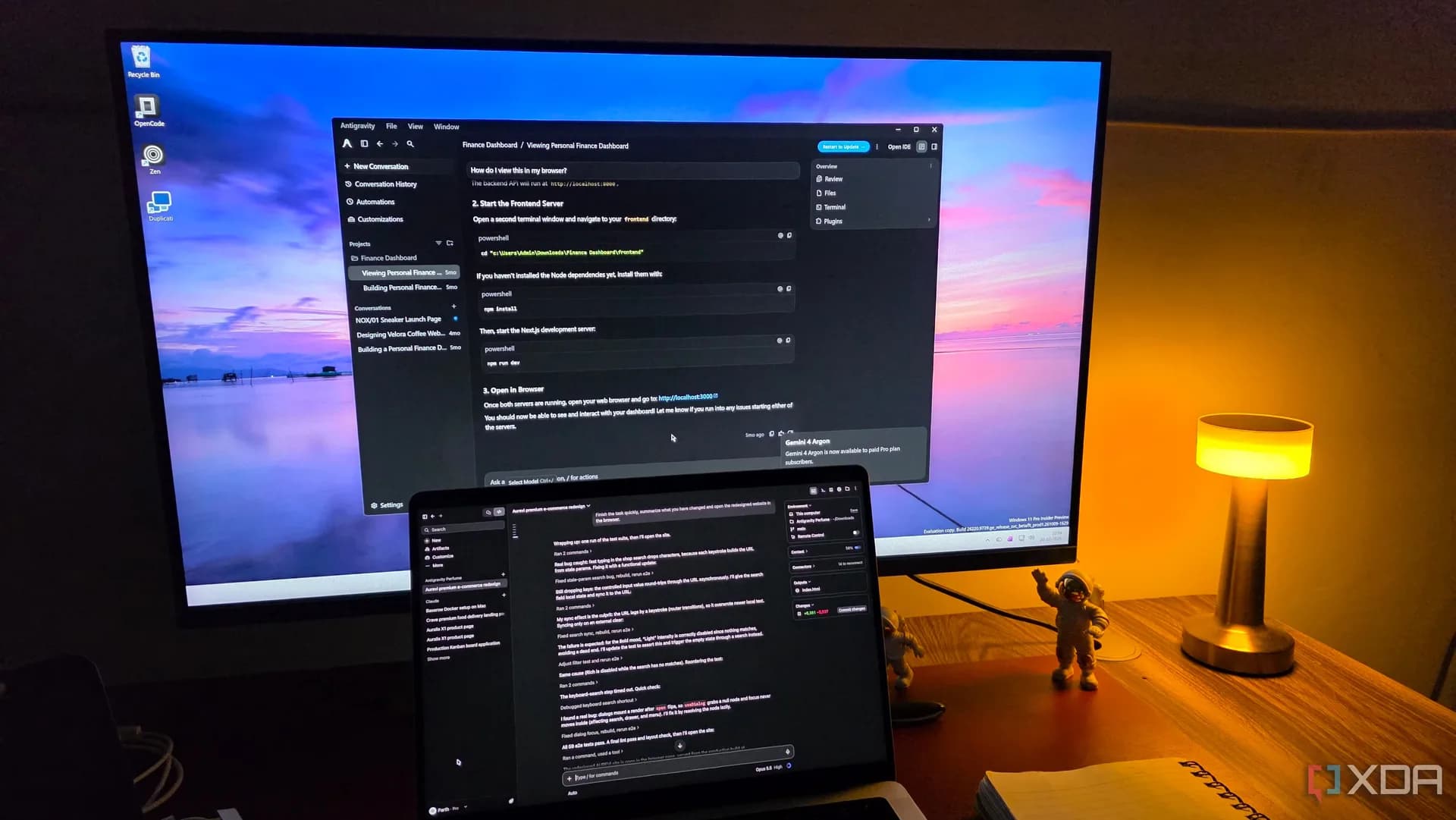

Be the first to comment
Join the argument. No password, just your email or a passkey.