Google Home app now supports phone-based presence sensing, multi-step automations, and Google Clock–triggered routines — all without a Nest thermostat or security system. The features are live globally as of November 1, 2026, and require no new hardware, subscription, or hub. They work with existing Google Home–compatible devices added years ago: smart lights, robot vacuums, plugs, Google TV units, and more.
No price change. No rollout delay. Just an update to the Google Home app on Android and iOS, and a quiet but meaningful expansion of what ‘Google Home’ actually means. It’s no longer just a remote.
It’s starting to behave like a real automation layer. And it’s free. The core upgrade is presence sensing: instead of relying solely on Nest hardware, Google Home now uses your phone’s location and Wi-Fi connection to determine whether you’re home or away. That unlocks triggers like “start vacuum when I leave” or “turn on porch light when anyone arrives, but only after sunset.” You set it up in Home Settings > Presence Sensing, under your profile picture.
Household members can each opt in. There’s no daily cap, no extra fee, no device limit. But there are limits. Automations can’t yet remember prior states, so if you dim a light before watching a movie, Google Home can’t restore that exact brightness afterward.
Nor can it run once per day by default. You’ll need time windows or manual toggles as workarounds. Still, the Google Clock app integration is sharper. Dismiss your alarm, and the app can trigger a cascade: weather and calendar readout via speaker, bedside lamp ramp-up, news stream on your phone, all sequenced with delays.
That works even on non-Pixel phones, as long as you install Google Clock from the Play Store. Google TV and projector users get new playback-state triggers: lights dim 30 seconds after playback starts. A single lamp turns on when paused. A connected washing machine?
Its completion status can flip a light’s color from red to green. These aren’t beta features. They’re in the stable Google Home app today. And they matter because most people don’t run Home Assistant.
Most people use the Google Home app, and for the first time in years, it’s doing more than turning things on and off. It’s stitching together routines that feel intentional, not incidental. Next up? Users want memory, variables, and conditional pauses, features already standard in open-source platforms.
Google hasn’t announced those. But it’s finally building toward them.
HTFiled by The Home Tech Desk
TVs, home appliances and the smart home: refrigerators, washing machines, air conditioners, purifiers, robot vacuums, the sets on the wall and the platforms that connect them. Launches, prices in the US and India, and what changed.
More from this desk →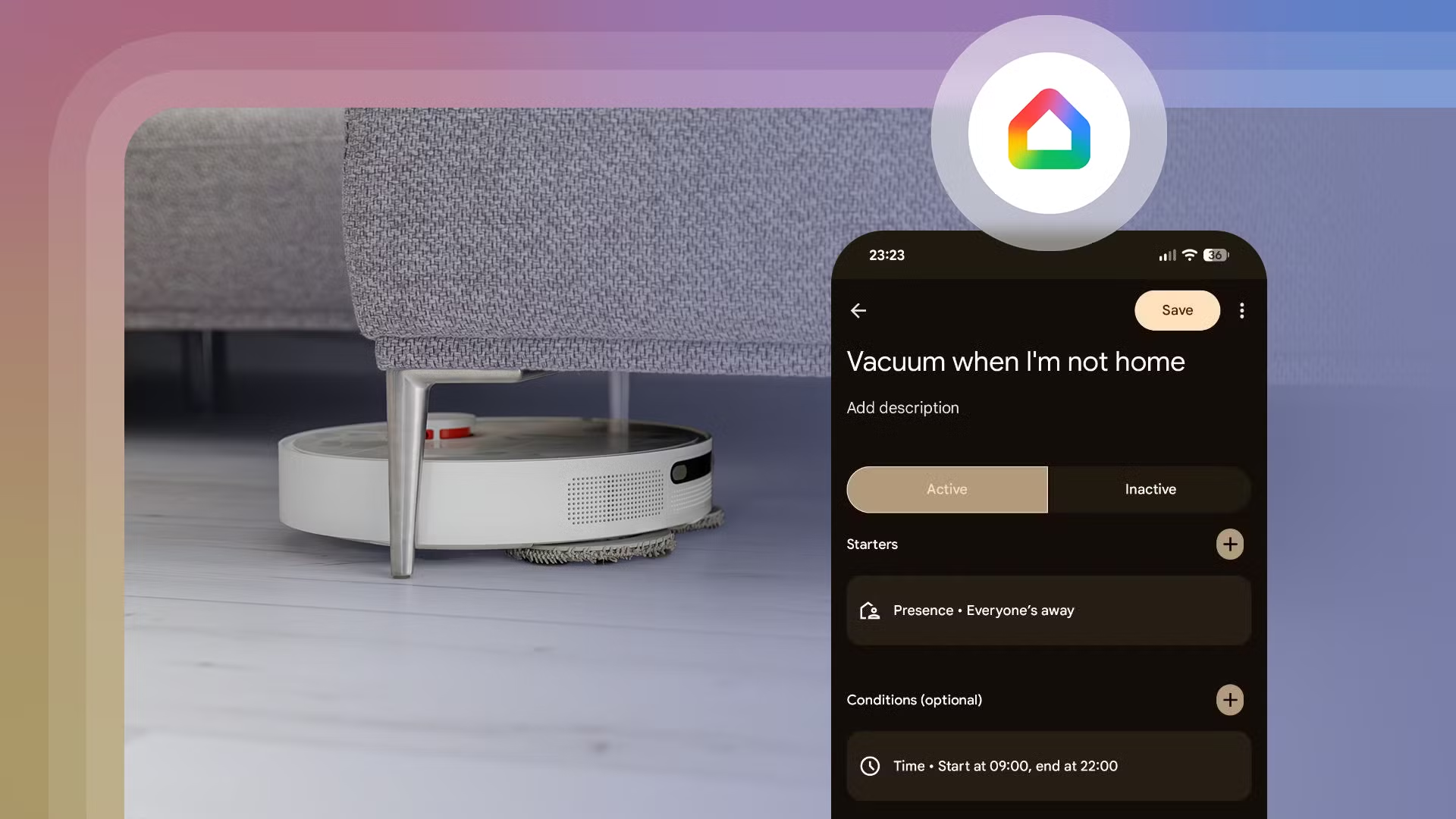
Be the first to comment
Join the argument. No password, just your email or a passkey.