Buying an entry-level Google flagship now comes with a steep hidden tax on internal memory. On a standard 128GB Google Pixel 10 Pro, system data combined with preinstalled machine learning utilities claims roughly 32GB right out of the gate, leaving just 96GB of actual room for user media and third-party software.
The biggest background offender is AICore, the system service Google introduced alongside the Pixel 8 Pro to manage local neural weights and keep tools like Gemini functioning without an internet connection. While lightweight maintenance utilities like Google Wi-Fi Provisioner clock in at 7.78MB and Sounds occupies 10.13MB, AICore alone consumes 6.73GB. Unlike typical Android system apps, its footprint rivals heavy media applications.
Additional Pixel-exclusive features chip away at what remains. Device Intelligence, which handles contextual screen prompts through Magic Cue, occupies 1.06GB. Pixel Screenshots claims another 1.14GB, while Pixel Studio requires 193MB. Add standard operating system code and temporary files into the mix, and buyers lose a full quarter of advertised capacity before downloading their personal libraries.
Few Options for Space Recovery
Reclaiming that storage is not straightforward. Standard troubleshooting methods do little, because AICore does not store its payload inside temporary cache files. Users can jump into the application's storage settings and wipe downloaded local model data, but the service tends to pull those files back down as soon as AI-linked tasks execute.
That creates an awkward crunch for users who do not rely on local processing. Google treats on-device machine learning as an always-on system tier rather than an optional toggle. Anyone who would rather offload Gemini requests entirely to remote servers to preserve gigabytes cannot simply switch the local framework off.
The Real Cost of Base Hardware
The issue sharpens the debate around baseline capacity across Google's lineup. The company stuck with 128GB on base configurations through the Pixel 9 and Pixel 10 generations, charging an extra $100 in the US to step up to 256GB. With modern operating systems growing larger and on-device machine learning engines staking out permanent claims on flash memory, entry-tier hardware faces artificial bottlenecks.
For now, Pixel owners running tight on space have few remedies beyond clearing local AI model packages inside AICore, shifting camera backups to cloud storage, and monitoring offline media libraries.
MDFiled by The Mobile Desk
Phones from leak to launch to price cut: what was announced, what it costs where, and when it goes on sale. Indian launches and prices included, not appended.
More from this desk →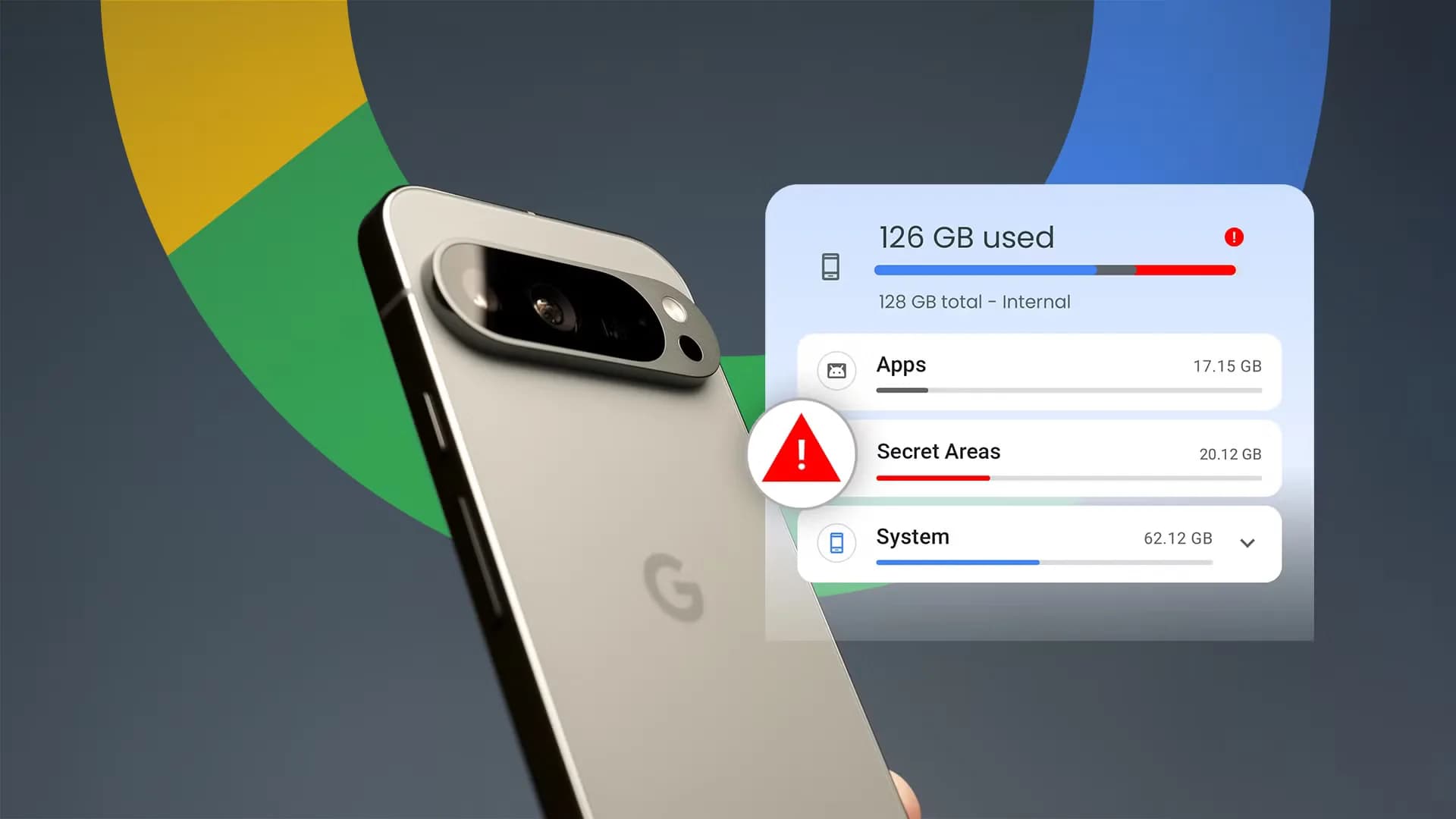

Be the first to comment
Join the argument. No password, just your email or a passkey.