Microsoft has introduced the Surface Laptop Ultra, replacing traditional Intel silicon with Nvidia's RTX Spark platform for its top-tier portable hardware. Shown off in San Francisco on Wednesday, the Copilot+ PC targets software creators and hardware builders looking to process large artificial intelligence models locally without relying entirely on remote servers.
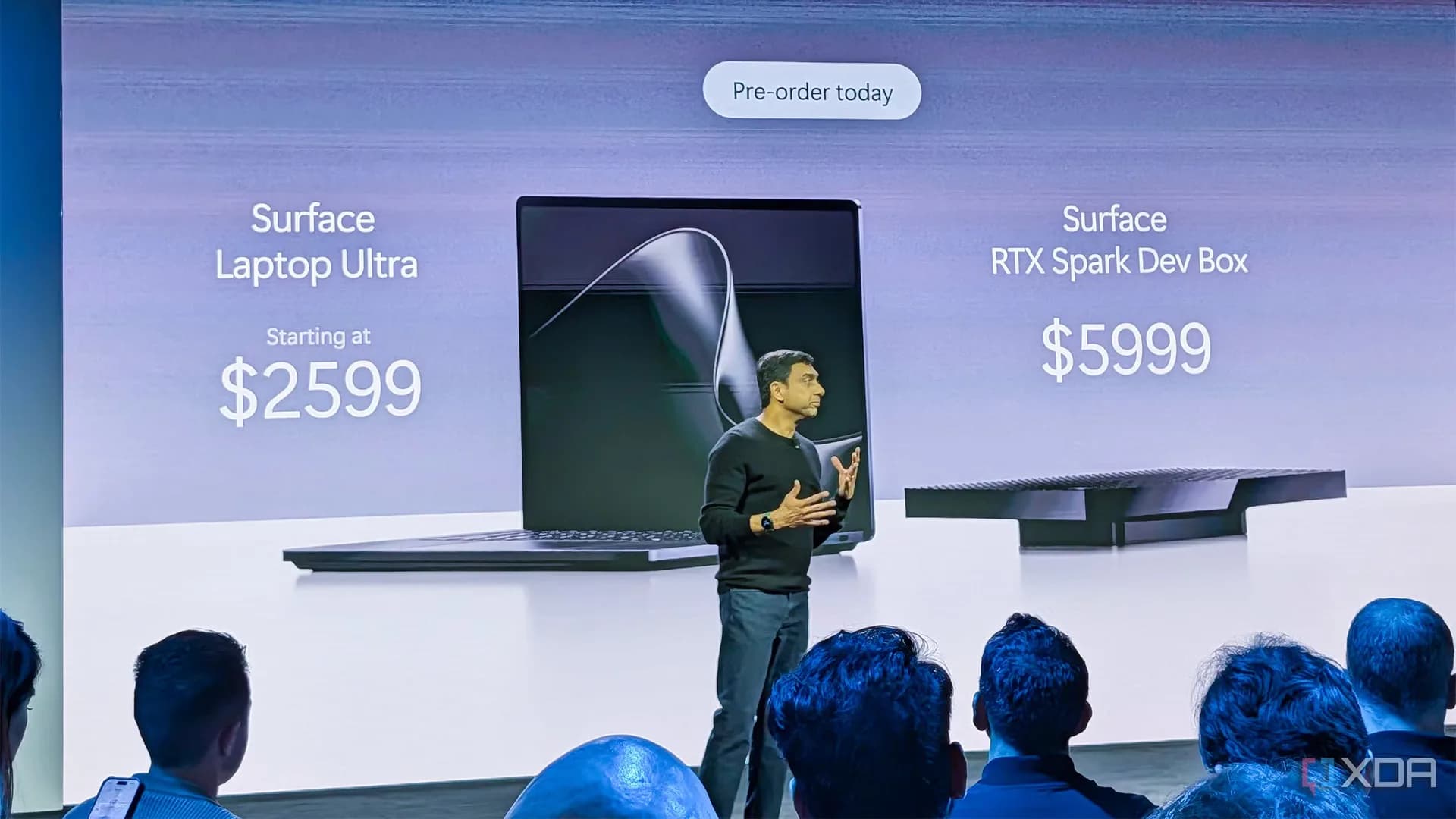
Pre-orders are open now, with units scheduled to ship next week. The entry configuration begins at $2,599 in the United States, giving buyers an 18-core N1X chip, 24GB of unified memory, and a user-replaceable 512GB solid-state drive in a gray aluminum chassis. Pushing the machine to its ceiling costs $5,899, which equips a 20-core processor, 1TB of storage, and 128GB of memory.
Silicon Architecture
The N1X processor at the center of the hardware builds on Nvidia's GB10 architecture. MediaTek and Arm handled the CPU design, paired with a Blackwell-generation graphics unit carrying between 5,120 and 6,144 cores depending on the configuration. Nvidia claims theoretical compute performance reaches 1 petaFLOPS at 4-bit precision through 2:4 sparsity, though standard workloads without that feature land around 500 teraFLOPS.
That ceiling gives the hardware enough local memory bandwidth to run large language models scaling up to 284 billion parameters at 1.6-bit precision. On the software side, Windows 11 uses hybrid compute features to split tasks between on-device components and remote data centers based on available network speeds, operational costs, data privacy, and model size. Traditional graphics performance gets a push as well, with Microsoft citing 60 frames per second in the current Gears of War entry.
Hardware and Ports
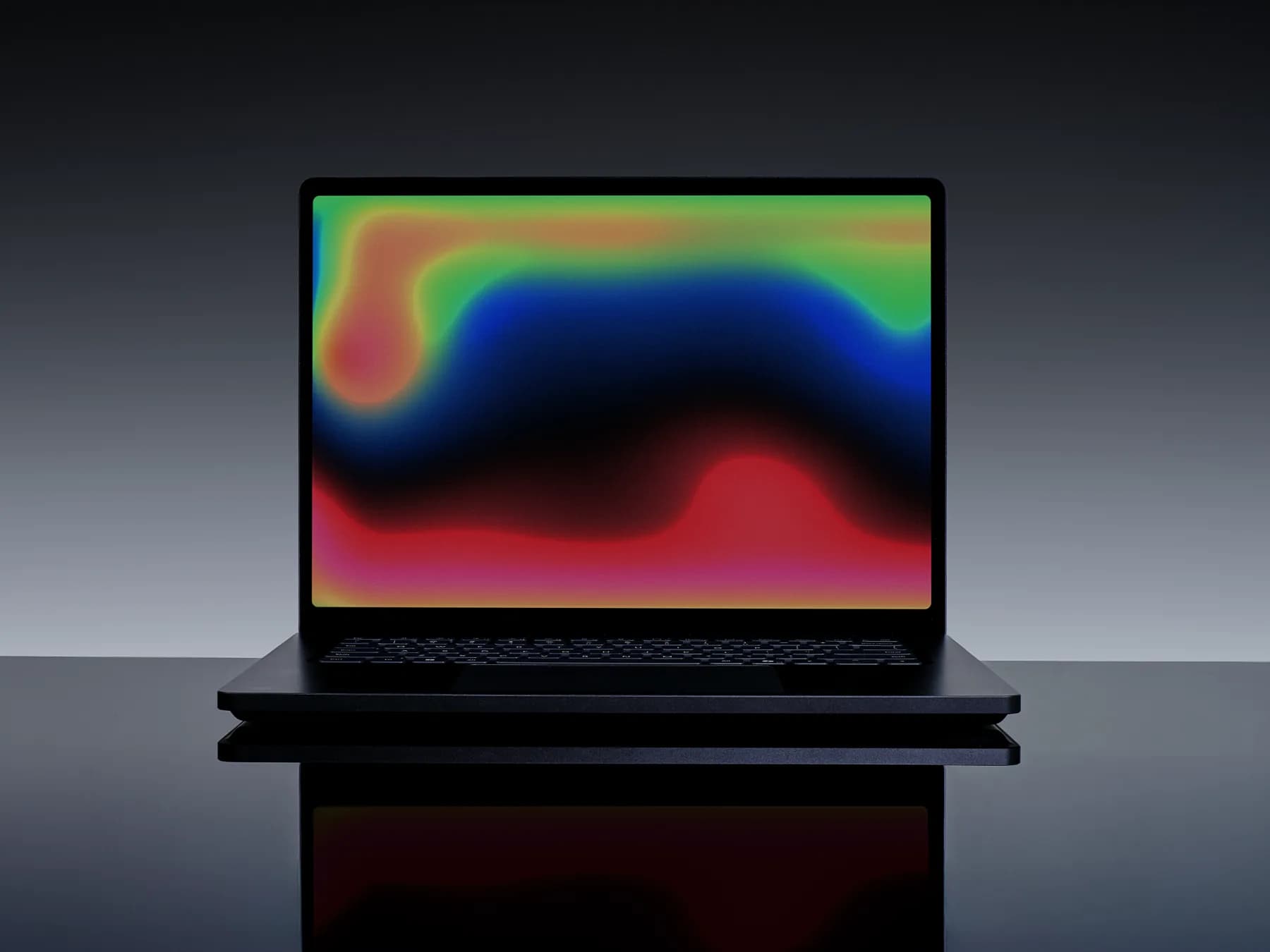
To manage the thermal load of the Blackwell GPU, Microsoft reworked the internal design with a vapor chamber setup that offers 2.5 times the thermal capacity of previous Surface notebooks. The exterior maintains Microsoft's customary 3:2 ratio with a 15-inch mini-LED screen outputting peak brightness of 2,000 nits. Beneath the tenkeyless keyboard sits a haptic trackpad.
Physical connectivity covers three USB-C ports, including one featuring a magnetic breakaway attachment for charging. Microsoft also retained an SD card reader, a full-size HDMI socket, and a solitary legacy USB-A port.
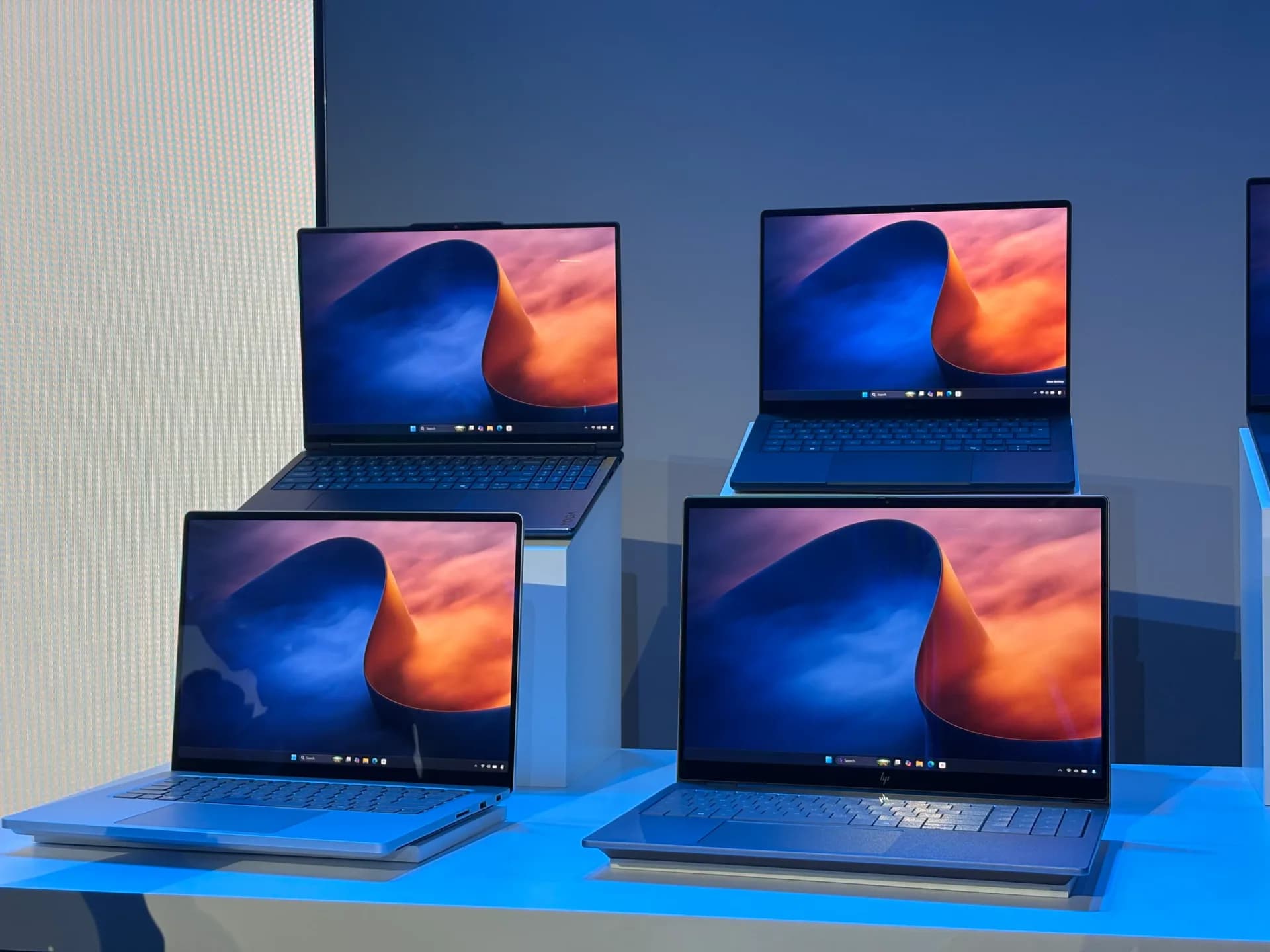
Alongside the consumer notebook, Microsoft showed a compact desktop development kit running the same N1X platform for $5,999. Hardware partners including Asus, Dell, HP, Lenovo, and MSI plan to begin shipping competing RTX Spark notebooks over the coming week.
CDFiled by The Computing Desk
Laptops, desktops, processors, graphics cards and the operating systems that run on them.
More from this desk →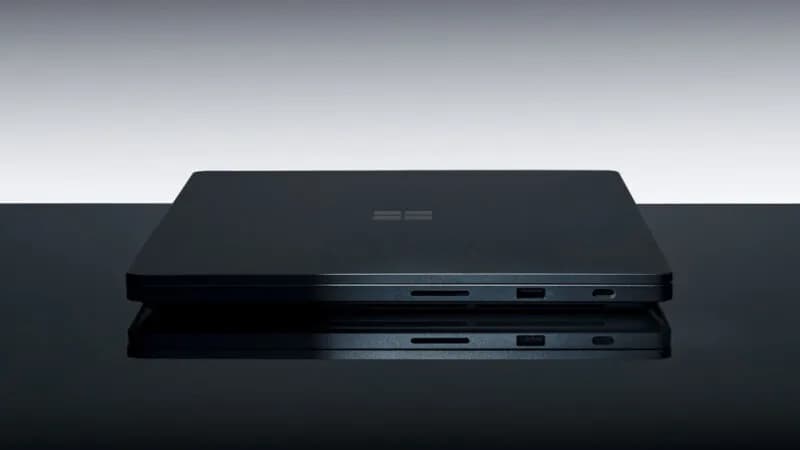
Be the first to comment
Join the argument. No password, just your email or a passkey.