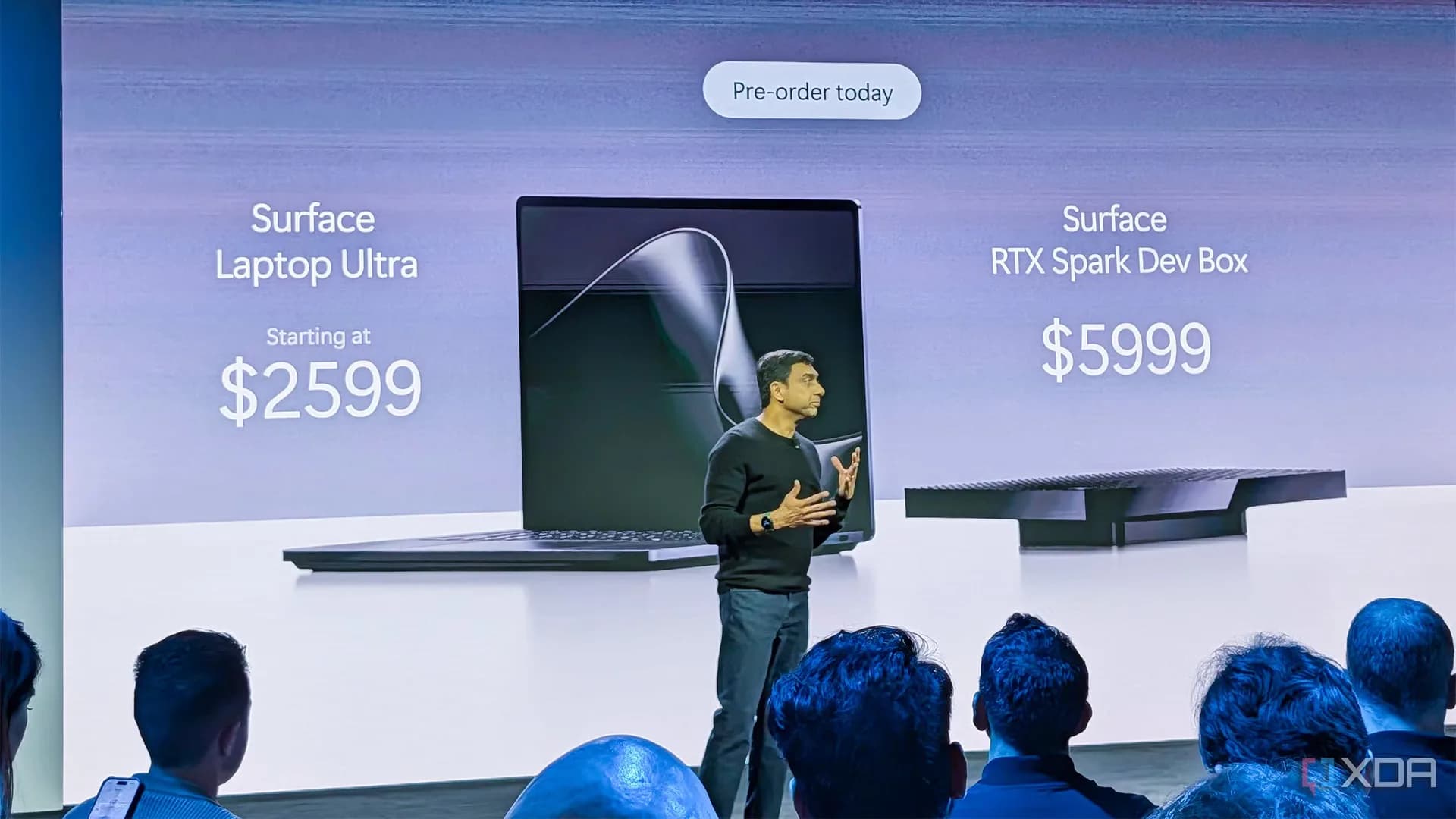
Microsoft began taking orders for the Surface Laptop Ultra on Friday, aiming its flagship notebook squarely at heavy artificial intelligence development. The machine starts at $2,599 through the company's official online store, with retail deliveries beginning on October 16.
Details regarding an Indian launch or local rupee pricing did not appear in the announcement, leaving prospective buyers in India waiting for regional distribution schedules.
Under the hood sits Nvidia's RTX Spark platform instead of standard laptop silicon. The system blends an ARM-based Grace central processor bearing up to 20 cores with Blackwell graphics that scale up to 6,144 cores. Memory configurations reach 128GB of unified RAM, giving the machine enough room to load generative systems without constant internet queries. Microsoft says the silicon can hit one petaflop of compute, enough to run models exceeding 120 billion parameters right on the device.
Putting native Nvidia CUDA support into a Surface chassis changes things for developers, engineers, and researchers. Teams prototyping autonomous agents or training vision tools can run code locally instead of paying hourly rental fees for remote cloud clusters. It also eliminates the transfer delays that come with shuffling multi-gigabyte training sets across the web.
Display and Hardware Specs
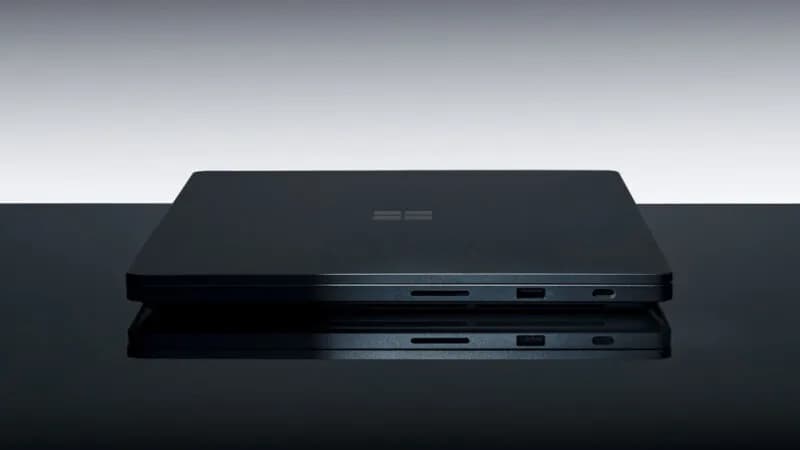
Microsoft directly compared the laptop to Apple hardware during the unveiling. The notebook carries a 15-inch touch panel that the company claims reaches 25 percent greater peak HDR output than an Apple MacBook Pro M5. It comes in Platinum or Nightfall, weighs 2.04kg, and stays under 18mm thick.
The physical ports do not follow the minimalist cuts typical of slim workstations. Along with two USB-C connections, Microsoft included HDMI, a full-size USB-A connection, an SD card slot, and a 3.5mm audio jack. The internal storage drive can be swapped out by the user, while the keyboard deck houses upgraded haptic feedback.
Windows Hybrid Intelligence
The machine also serves as the flagship showcase for what Microsoft calls Windows hybrid intelligence. Under this setup, the operating system lets Copilot and background agents split workloads between local silicon and remote cloud infrastructure, balancing battery consumption, processing speed, and privacy.
Because files stay on the drive, Copilot can inspect local data, execute models, and perform cross-app actions without uploading proprietary records to external servers. Microsoft stated that coding agents can inspect directories and generate software directly within the operating system's security controls. For enterprise customers, handling tasks on physical hardware helps satisfy strict corporate compliance rules that ban offloading confidential records to outside data centres.
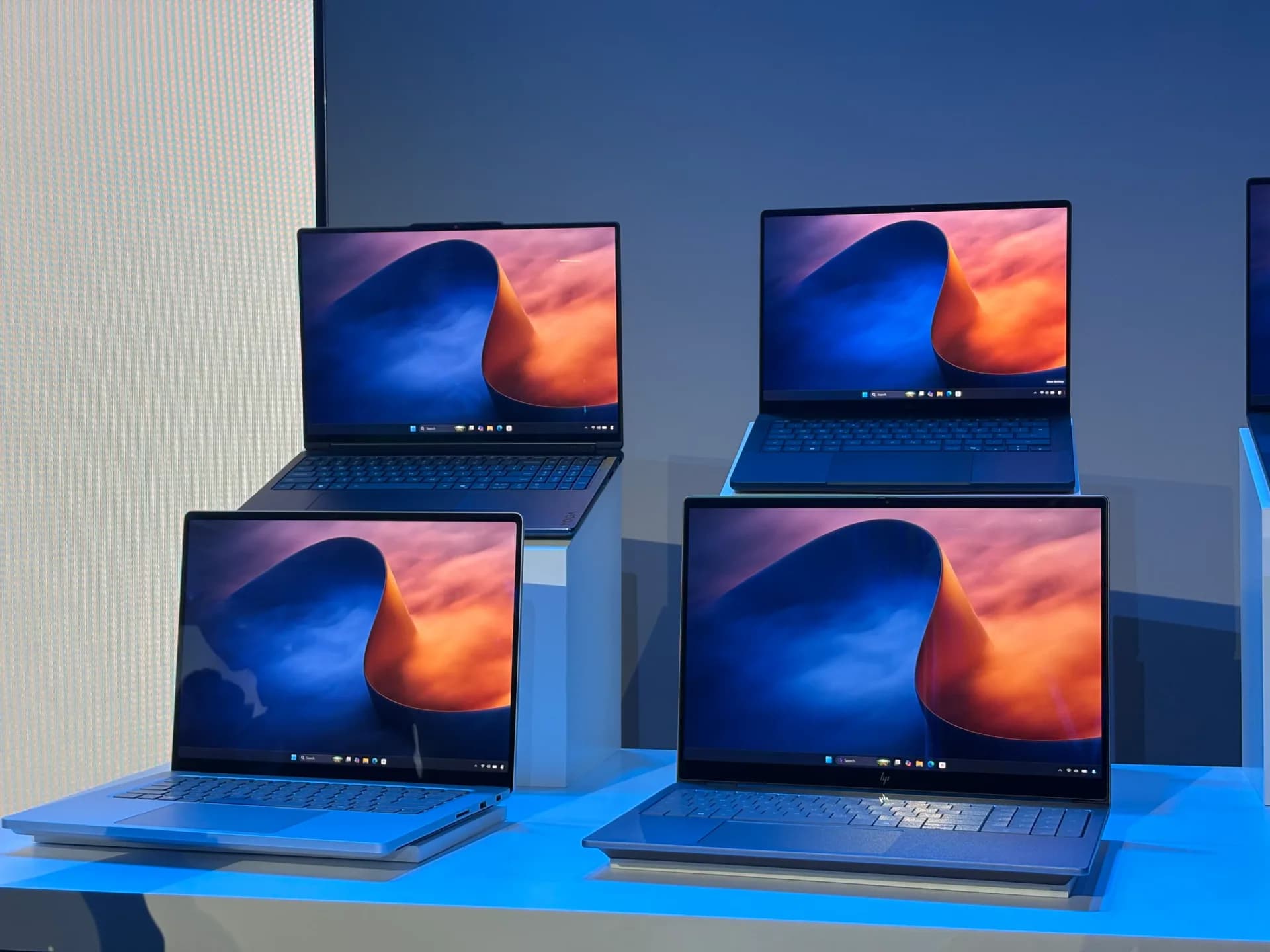
Third-party software will tap the same foundation. Meta is preparing an installable Windows version of its Muse agent, reinforcing Microsoft's push to let competing assistants share space on the desktop.
American buyers can order the notebook now starting at $2,599, with retail deliveries starting October 16.
CDFiled by The Computing Desk
Laptops, desktops, processors, graphics cards and the operating systems that run on them.
More from this desk →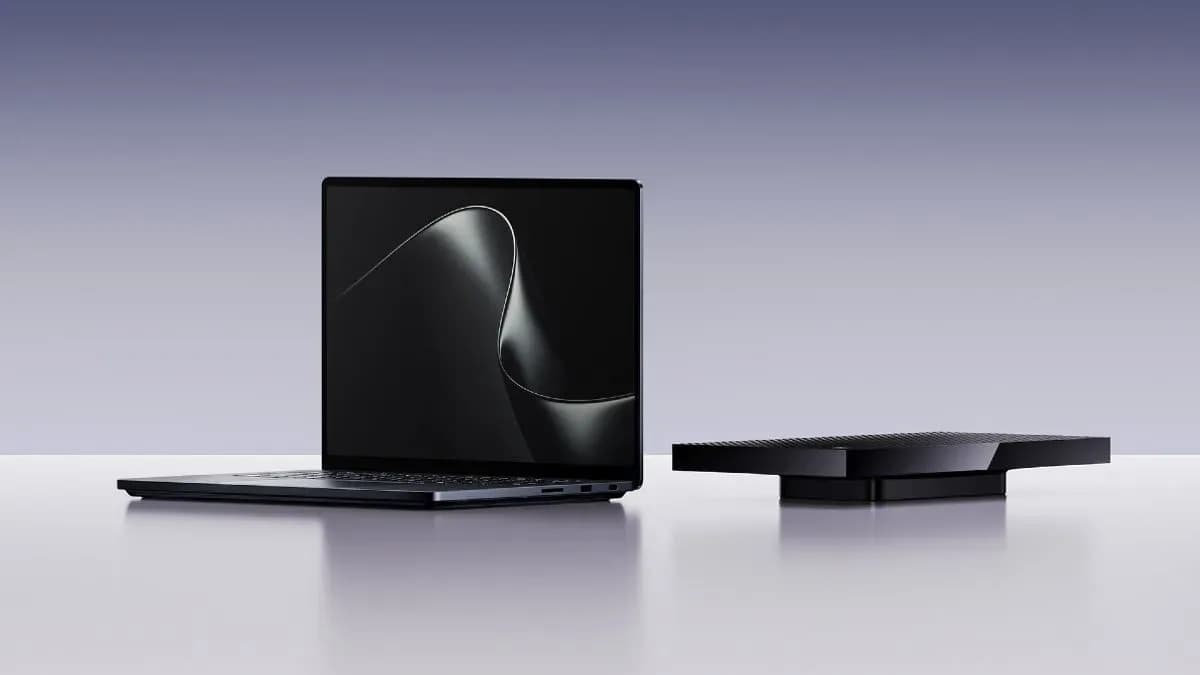
Be the first to comment
Join the argument. No password, just your email or a passkey.