Nvidia has finished retiring the classic Control Panel for GeForce systems running Game Ready and Studio drivers. The standalone Nvidia App now houses every actively maintained switch that used to sit inside the legacy desktop utility.
Version 11.0.9 marks the formal end of that transition. Rather than running two separate background tools — one dated Windows 98-era control deck and one companion launcher, GeForce owners now manage driver branches, display syncing, and rendering defaults through a unified interface. The software also layers in features the old panel never supported, including local AI helpers and automated shader handling.
The software still splits installations between Game Ready Drivers for new game releases and Studio Drivers for validated creative software. You do not need dedicated wipe software like DDU for routine patching. In-app rollback options now let users jump back to the previous release if a freshly installed package introduces regressions.
Beyond driver maintenance, the software folds in broadcast controls, RTX Video Super Resolution, and G-Sync configuration. ShadowPlay can capture gameplay at up to 240 frames per second. The Discover hub links out to companion software such as Nvidia Broadcast, RTX Remix, GeForce NOW, and Project G-Assist. Project G-Assist operates locally on compatible RTX silicon, pulling system telemetry and tweaking settings through voice or peripheral commands.
Shaders and DLSS Overrides
The Graphics tab combines automated presets with deep driver-level overrides that replace the old Manage 3D Settings pane. Modern DirectX 12 and Vulkan titles run tighter engine pipelines than older games, so brute-forcing global driver overrides can destabilize rendering. A few toggles, however, do heavy lifting.
Shader cache limits now range from a conservative 128MB all the way to 100GB or Unlimited. Modern releases like Borderlands 4 demand immense cache headroom to curb compile stutters. While the default 16GB ceiling works for smaller boot drives, high-capacity solid-state drives can safely allocate up to 100GB to retain compiled assets across titles. Unlimited remains an option, though it merely removes the capacity cap rather than granting extra processing speed.
Nvidia has also bundled an Automatic Shader Compilation feature, currently in beta testing. When your rig sits idle following a driver update, the tool rebuilds DirectX 12 shaders in the background so games launch without initial stuttering fits.
For image quality, the app adds direct DLSS overrides. Instead of waiting on studio patches to fix older dynamic-link libraries, users can enforce updated Nvidia-supplied models for Super Resolution, native-resolution DLAA, Frame Generation, and DLSS 4.5 Ray Reconstruction globally or on a per-title basis. Per-app controls for Resizable BAR have also arrived. Expect upcoming driver branches to push more legacy displays and diagnostic controls into the client.
CDFiled by The Computing Desk
Laptops, desktops, processors, graphics cards and the operating systems that run on them.
More from this desk →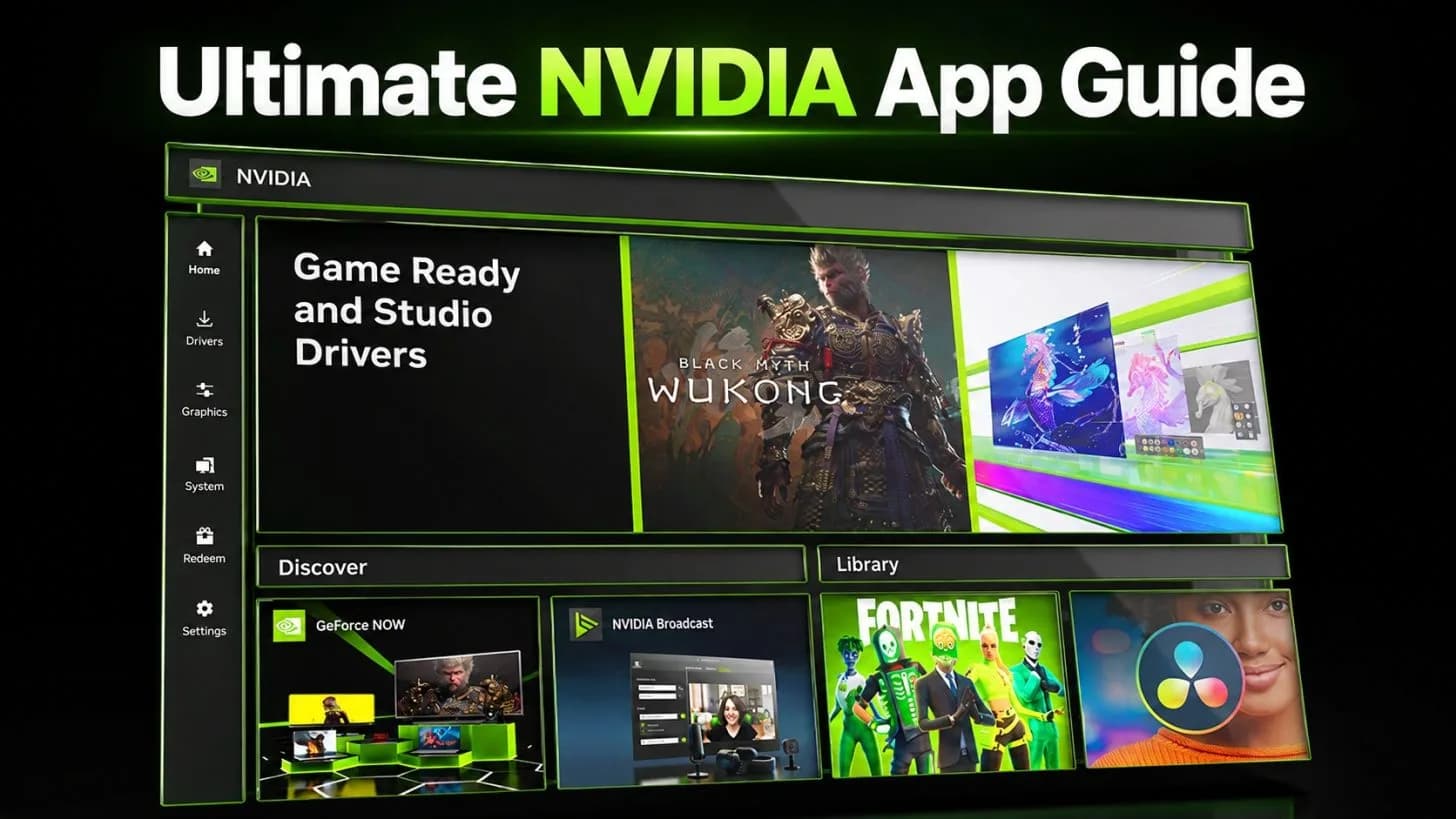
Be the first to comment
Join the argument. No password, just your email or a passkey.