NVIDIA’s GTC Berlin 2026 kicks off this week, with Jensen Huang scheduled to deliver a keynote on Wednesday. It’s the company’s third of four planned GTC events in 2026 — but unlike the March San Jose and June Taipei editions, Berlin is shaping up as the quietest of the lot.
No Vera Rubin system ramp announcements. No new rack-level architecture reveals. No Feynman architecture deep dive, at least not in full. Instead, the focus is Europe’s AI ecosystem: speakers from Mercedes-Benz, Siemens, SAP, Schneider Electric, and Nebius will dominate the agenda.
Major chipmakers, including Intel, AMD, Samsung, Broadcom, Marvell, Micron, and SK hynix, won’t be headliners. That absence doesn’t mean irrelevance. Quite the opposite.
Intel stands to gain the most from what NVIDIA doesn’t announce, and what it does quietly confirm.
First, Intel’s Xeon CPUs remain the host processors inside NVIDIA’s Blackwell-based DGX B300 and Rubin-based DGX Rubin NVL8 systems. And despite NVIDIA’s shift toward Arm-based Rosa CPUs for future platforms, Xeon is still expected to anchor host duties in Feynman-generation DGX systems. Any official confirmation, even a passing mention, would reinforce Intel’s position in NVIDIA’s high-end AI infrastructure stack. That’s revenue Intel can count on, at least through the next cycle.
Second, supply chain realities are tightening. TSMC’s CoWoS packaging capacity remains constrained. That opens the door for alternatives. Rumors persist that NVIDIA may fabricate the I/O die for Feynman on Intel’s 18A-P or 14A process nodes. Even more concretely, Intel’s EMIB-T or Foveros advanced packaging technologies could land a slice of the Feynman packaging workload.
Neither possibility is confirmed. But even speculative hints, delivered on stage in Berlin, could trigger investor reassessment of Intel’s foundry and packaging prospects. Analysts watching the event won’t be parsing AI training specs. They’ll be listening for one-word nods: “Intel”, “18A”, “EMIB”, “Foveros”.
That makes GTC Berlin less about NVIDIA’s next leap, and more about who gets to build the runway.
The event runs against a backdrop where NVIDIA’s dominance is unquestioned, but its dependencies are increasingly visible. Its AI hardware pipeline relies on partners across the stack: memory (SK hynix, Micron), interconnects (Marvell, Broadcom), and now, potentially, silicon fabrication and packaging outside TSMC.
For Intel, that’s not just opportunity, it’s validation. A chance to prove its process and packaging tech isn’t just theoretical. That its 18A node isn’t just a slide in a roadmap, but a real option for the world’s most demanding AI chips.
No launch. No price. No spec sheet. Just positioning, and the weight of implication.
GTC Berlin ends Wednesday. What NVIDIA says, or doesn’t say, about Intel could move markets before the weekend.
CDFiled by The Computing Desk
Laptops, desktops, processors, graphics cards and the operating systems that run on them.
More from this desk →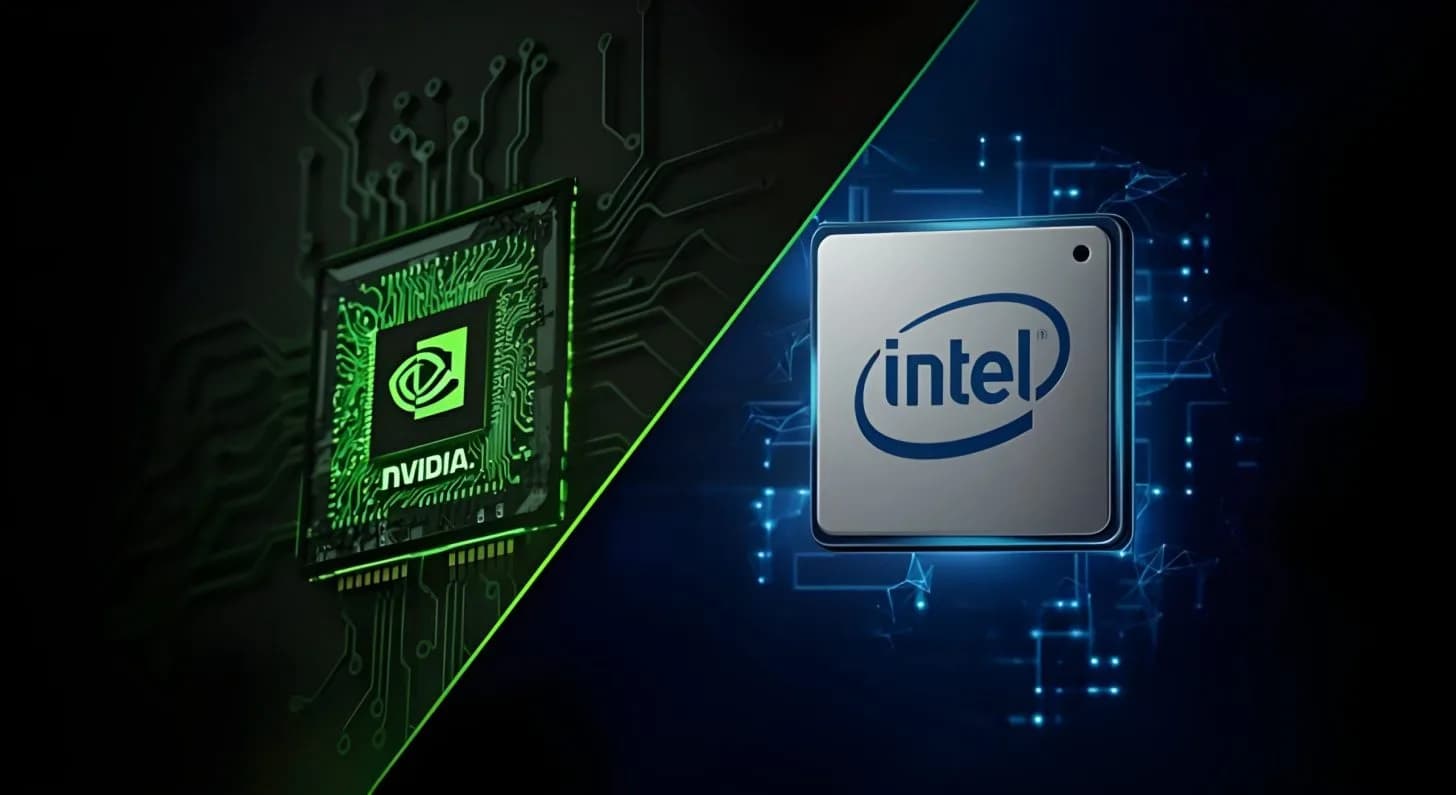


Be the first to comment
Join the argument. No password, just your email or a passkey.