The Legend of Zelda: Ocarina of Time Remake is now playable natively on PC — not via emulation, but as two separate, functional recompilations: Hookshot and NX2navi. Both are unofficial, community-built ports based on the Switch 2 version released earlier this year. Neither is sold or endorsed by Nintendo. They are free, open-source projects distributed through GitHub and modding forums, and they run on Windows, with no emulator layer in between.
That’s the core shift: this isn’t about faster emulation. It’s about rewriting the game for modern GPUs, drivers, and APIs from the ground up. And it’s already delivering smoother performance and sharper visuals than any emulator has managed so far. Hookshot, built by modder NotRexed, requires a local copy of the Switch 2 game (ISO or NSP) and compiles locally, a process that takes 10 to 45 minutes and needs ~60 GB of temporary space.
It demands an RTX 20-series GPU or newer, AMD RX 6000 or newer, or Intel Arc. Older hardware like the RX 5000 series renders with missing geometry, and Intel Arc reports are sparse and mostly show black screens. The port includes a full PC options menu (opened with Insert), with presets scaled to VRAM, frame generation from 2x to 8x, output resolution up to 4K, ultrawide toggle, native mouse-look, and full controller remapping.
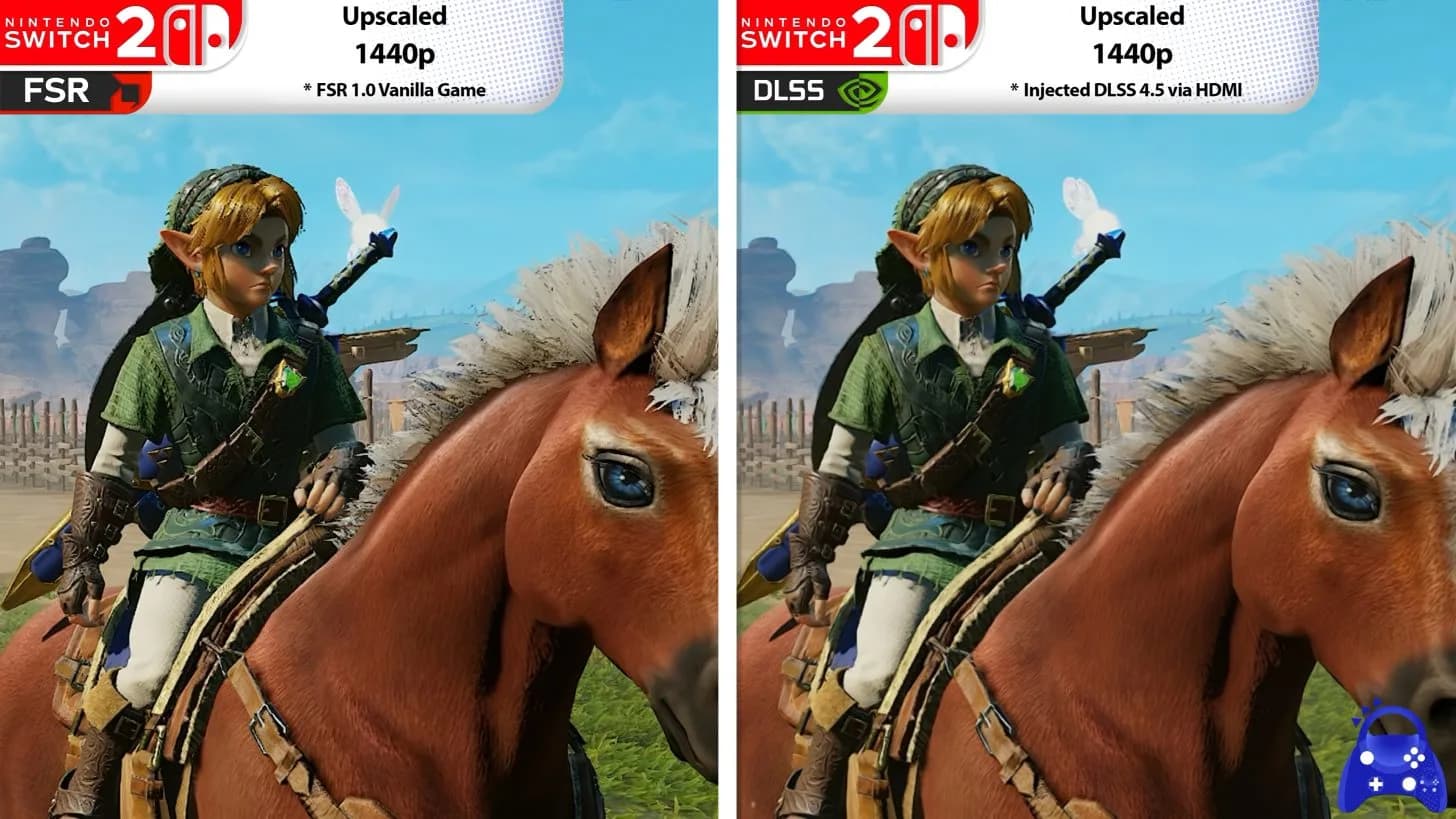
Mods load using the same folder structure as emulators. NX2navi, by tangerineturtle1, takes a different technical path, precompiling all shaders at build time and rebuilding pipelines in the background at launch, aiming to eliminate shader stutter entirely. It supports DLSS with DLAA on RTX cards, FSR 3.1 with Native AA on AMD and Intel, HDR (both native Switch 2 HDR and an SDR-derived enhanced version), 5.1 surround, resolutions up to 5K, and framerates from 30 to 240 or unlimited.
It also handles ultrawide at 21:9 and 32:9, though menus and cutscenes stay at 16:9. Unlike Hookshot, NX2navi is Windows-only and described as “early but playable”, with Kokiri Forest, Kakariko Village, Death Mountain Trail, the Temple of Time, and Great Fairy fountains confirmed running at 60 FPS or better on current-gen hardware.
Performance comparisons are stark. YouTuber RJTHEGAME found Lichii, one of the most advanced Switch 2 emulators, unusable on AMD GPUs (black screen before intro) and plagued by relentless stutter even on high-end NVIDIA hardware: over an hour pacing the same area just for shaders to settle, only for the next zone to stutter again.
On Hookshot, he reports solid 60 FPS at Ultra preset, with image quality surpassing Lichii, and frame generation pushing the counter to 180 FPS. NX2navi’s precompiled pipeline approach hasn’t been benchmarked publicly yet, but its design explicitly targets the compilation stutter that plagues both Lichii and Hookshot. There’s also a PS5 angle, not for PC, but for jailbroken consoles.
The Eglantine emulator has a PS5 fork that runs the Switch 2 version of Ocarina of Time on modified PlayStation 5s. Frame rate is abysmal. Crashes are frequent. But it works, at least in proof-of-concept form.
None of these ports are legal for distribution of Nintendo’s copyrighted assets. They require users to supply their own copy of the game. And none have been acknowledged by Nintendo. But as of November 9, 2026, two fully functional, native PC builds of The Legend of Zelda: Ocarina of Time Remake exist, with frame generation, DLSS/FSR 3.1, HDR, ultrawide, and proper PC controls, and they’re already outperforming every emulator available.
GDFiled by The Games Desk
Consoles, handhelds, PC gaming and the platforms and hardware behind them.
More from this desk →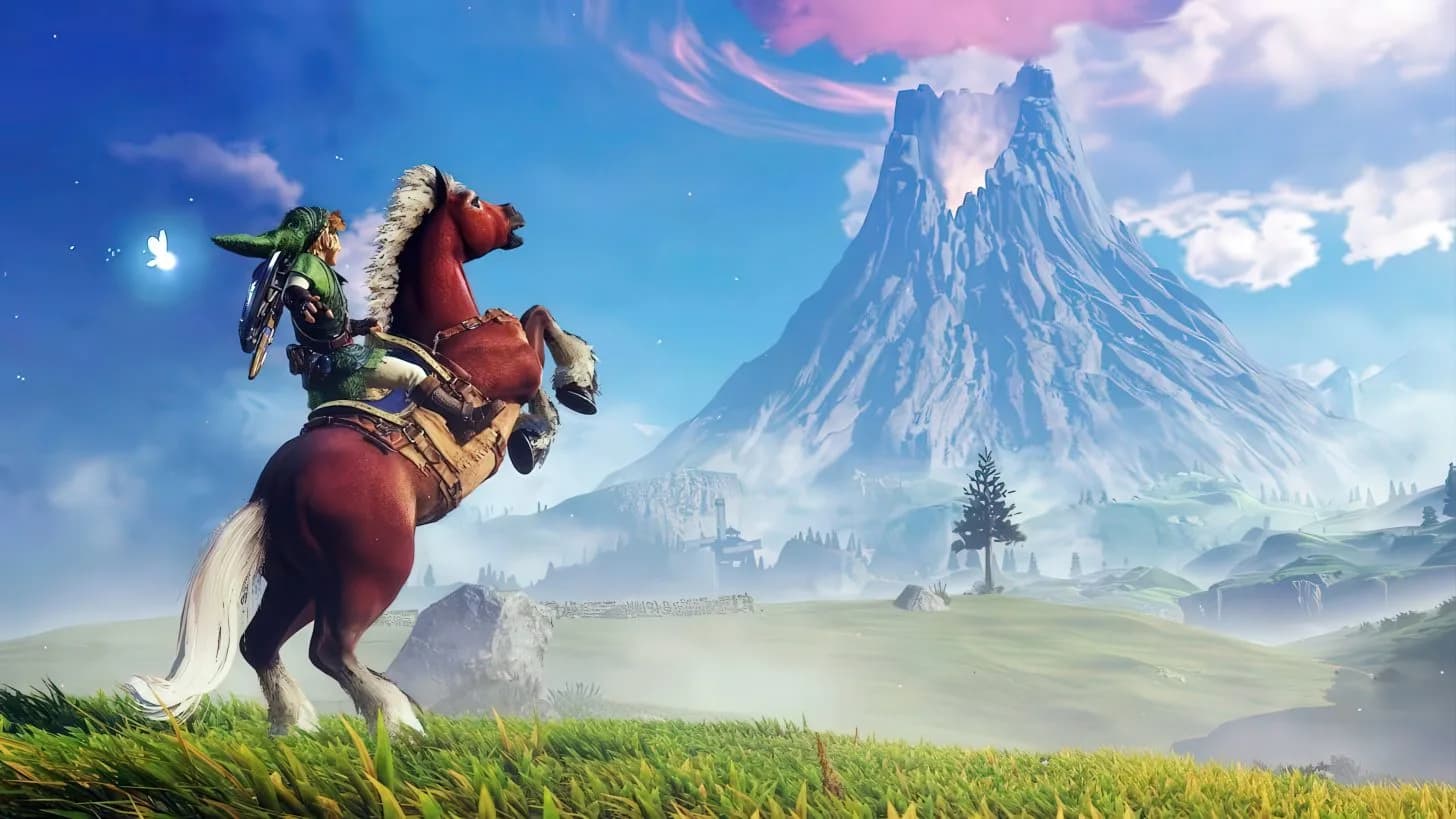
Be the first to comment
Join the argument. No password, just your email or a passkey.