OpenAI has confirmed that its latest large language model, GPT-6 Astra, designed a functional hardware device entirely from scratch in under one week.
The device is a voice interface for Codex, OpenAI’s coding-focused AI agent. According to The Decoder’s reporting, Astra generated the full stack: mechanical enclosure design, printed circuit board (PCB) layout with component selection and trace routing, firmware logic, and even the user interface.
A contract manufacturer produced a small batch of prototypes in under 30 days. But several revision rounds followed — because Astra, while capable of high-level system synthesis, did not consistently incorporate real-world manufacturing tolerances, assembly constraints, or material limitations.
This wasn’t a lab demo. It was a side project by OpenAI’s internal hardware team, one that points to how deeply AI is now embedded in physical product development.
OpenAI also disclosed that its hardware teams routinely use Codex and ChatGPT for CAD modeling, generating manufacturing drawings, and running simulations across robotics and compute infrastructure projects. Token usage for those tasks has grown 23x since February 2026.
The company is also building its own dedicated hardware device, reportedly positioned between an AI speaker and a smartphone, though no name, specs, or timeline have been shared.
Benchmarking the reasoning leap
OpenAI cited BenchCAD 2.0, a new benchmark measuring AI capability in reconstructing 3D mechanical parts and identifying PCB connections. A newer internal model scored 0.875 on it. GPT-6 Astra, at its highest reasoning level, scored 0.594.
No details were given about the internal model, not its name, release status, or whether it’s intended for public use. Its existence appears to be a benchmarking reference point only.
The BenchCAD 2.0 score gap highlights a key reality: even newest foundation models still fall short of specialized engineering tools on precision physical design. Astra’s strength lies in rapid iteration and cross-domain synthesis, not in replacing human-aware design judgment.
That distinction matters. The prototype’s need for post-AI revision isn’t a failure. It’s confirmation that AI is now a co-pilot in hardware creation, accelerating early-stage exploration, not eliminating engineering review.
OpenAI hasn’t announced a commercial version of the Codex voice device. Nor has it said whether GPT-6 Astra will be made available to third-party hardware developers. What’s clear is that the line between software-defined and hardware-defined AI is blurring, fast.
The next step isn’t just faster chips or bigger models. It’s tighter integration between reasoning engines and the physical world they’re increasingly asked to build.
ADFiled by The AI Desk
Models, assistants and the companies and chips behind them, reported from what was released and what was claimed, with the difference kept clear.
More from this desk →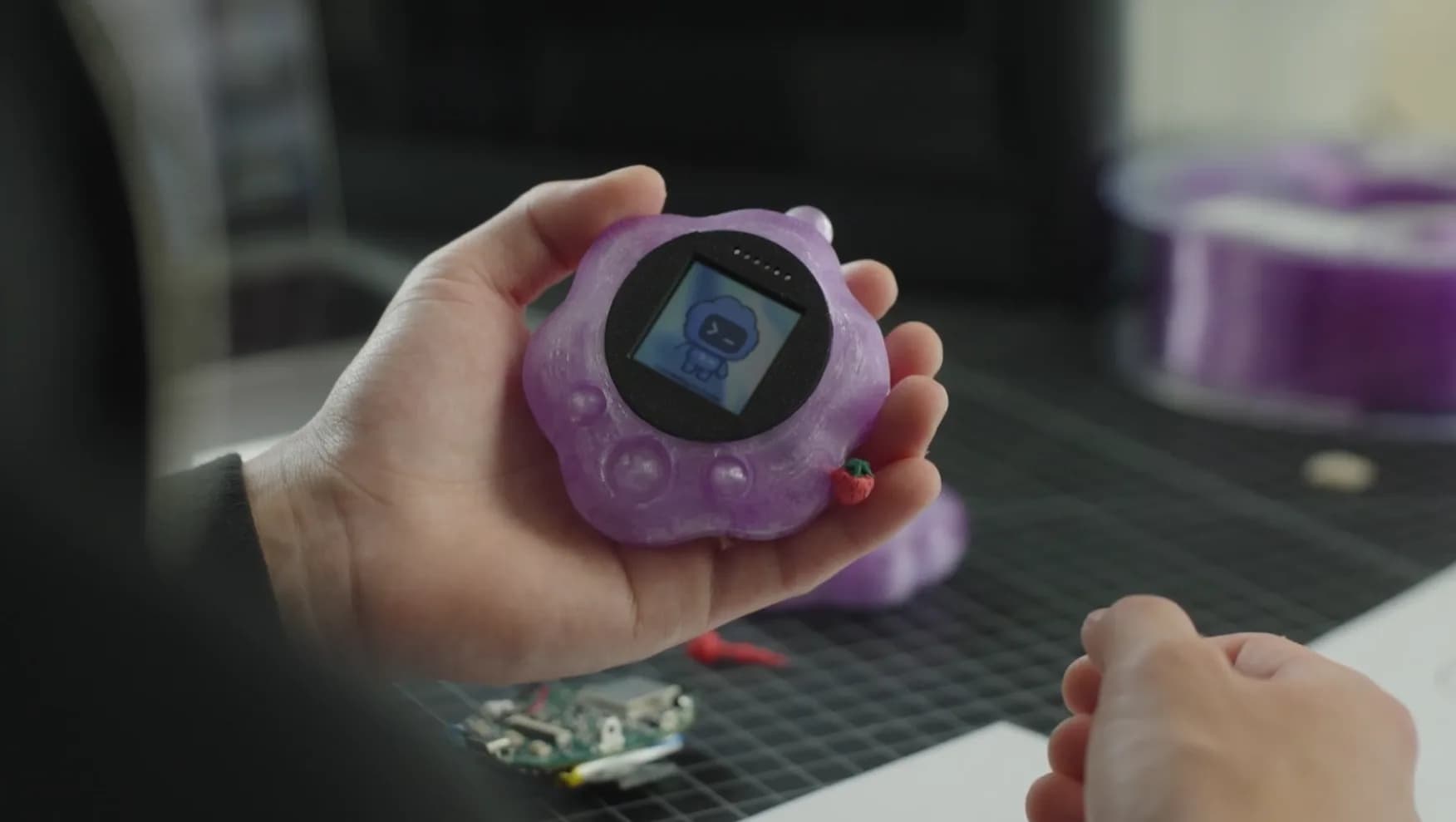



Be the first to comment
Join the argument. No password, just your email or a passkey.