The Legend of Zelda: Ocarina of Time remake is running at 60 FPS on PC emulators Lichii and Eglantine — one day after launching on Nintendo Switch 2. It was previously stuck at 15–30 FPS with severe visual glitches, including white flashes, black screens on AMD hardware, and texture flickering in foliage and ground textures.
Now, the Great Deku Tree and Kokiri Forest load cleanly at full speed in Lichii’s latest build, with only minor stutters and occasional freezes remaining. A user on X reported stable 4K 60 FPS playback, no bloom artifacts, no slow motion, no rendering corruption, just ‘minor’ hiccups in timing-sensitive sequences.
That’s not polished. But it is playable. And it’s faster than yesterday. By a lot.
So fast, in fact, that modders are already debating whether Nintendo’s choice of AMD FSR 1.0 over DLSS on Switch 2 is holding back the game’s image quality, even though the console itself supports DLSS natively. YouTuber ElAnalistaDeBits demonstrated injecting NVIDIA DLSS via HDMI capture to suppress shimmering from FSR 1.0.
It doesn’t change what the Switch 2 renders. But it shows how much headroom there is, and how odd it is that Nintendo didn’t use its own hardware’s capability. The fixes came in two rapid-fire branches pushed to Eglantine’s GitHub repo on November 6: oot-blackscreen (fixing occlusion counter resets and storage buffer binding for vegetation) and oot-optimization-fixes (adding pipeline caching across 16 sessions, background-thread shader compilation, and smarter draw queue scheduling).
Lichii, a fork of Eglantine, inherited both. Neither emulator is officially endorsed by Nintendo. Neither is meant for public release. But they’re working.
And they’re improving faster than most commercial ports do in their first week. The remake launched globally on Switch 2 on November 5, 2026, priced at $69.99 in the US and ₹5,999 in India. It runs natively on Switch 2 at 30 FPS with FSR 1.0 upscaling, a choice that now looks increasingly like a software constraint, not a hardware one.
Emulator progress doesn’t affect Nintendo’s official release. But it does expose how much room remains for optimization, and how quickly the community can close that gap when the code is accessible. Next up: fixing audio desync in cutscenes, stabilizing lighting in the Great Deku Tree’s opening animation, and eliminating the last of the foliage shimmer.
No ETA. Just commits. And momentum.
GDFiled by The Games Desk
Consoles, handhelds, PC gaming and the platforms and hardware behind them.
More from this desk →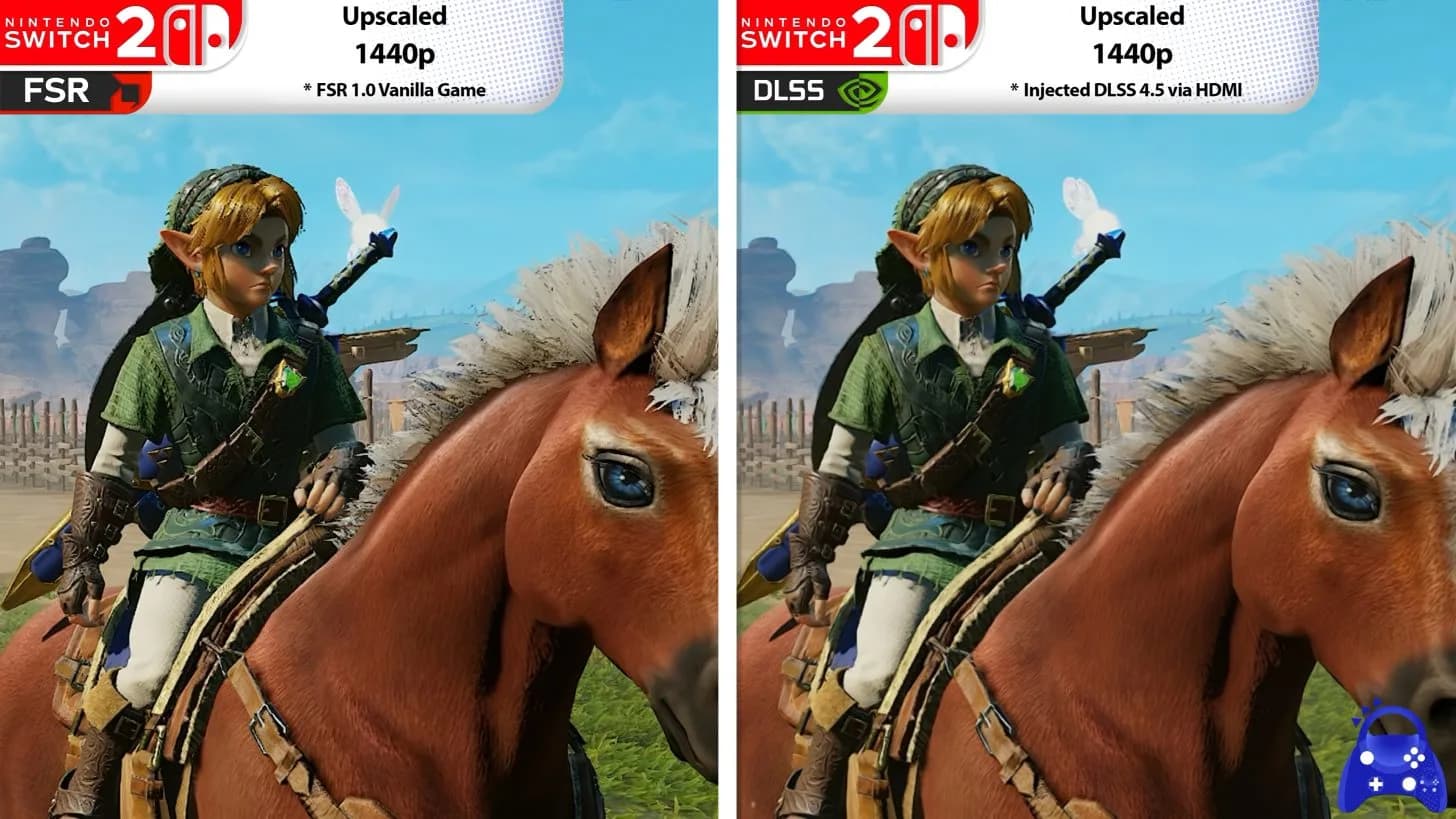
Be the first to comment
Join the argument. No password, just your email or a passkey.