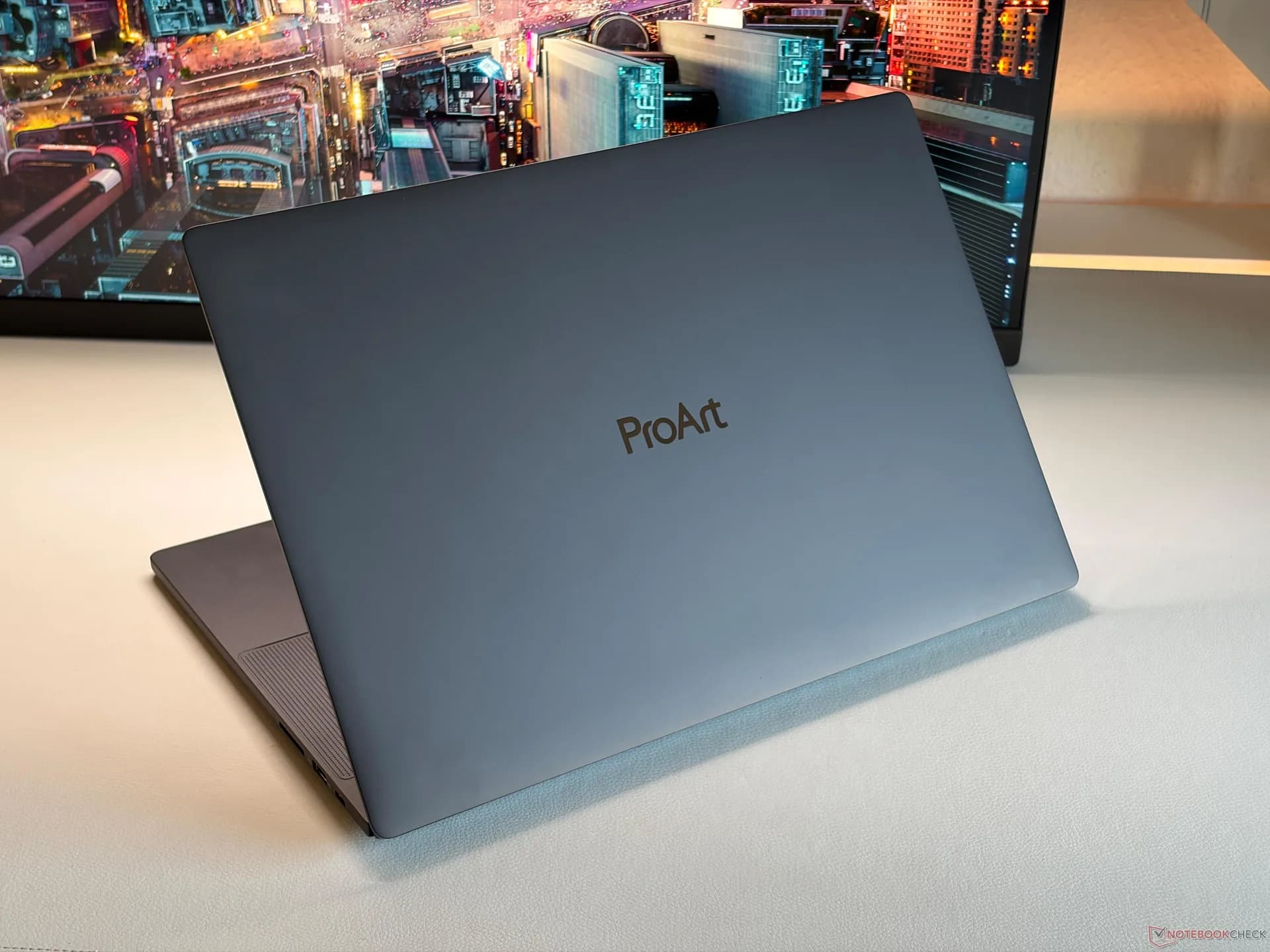
Asus launched the ProArt P16 and ProArt P14 on Wednesday, putting Nvidia's unified RTX Spark architecture into retail machines for the first time. Pre-orders opened immediately in the United States, with retail shipments scheduled to kick off on October 16.
Pricing starts at $2,599.99 for the base configurations. Asus split the retail availability across channels: versions equipped with 24GB to 48GB of unified memory are heading to Best Buy and the Asus eShop, while upper configurations packing 64GB and 128GB will sell through Best Buy, Micro Center, and Asus directly.
Nvidia Silicon and Unified Memory
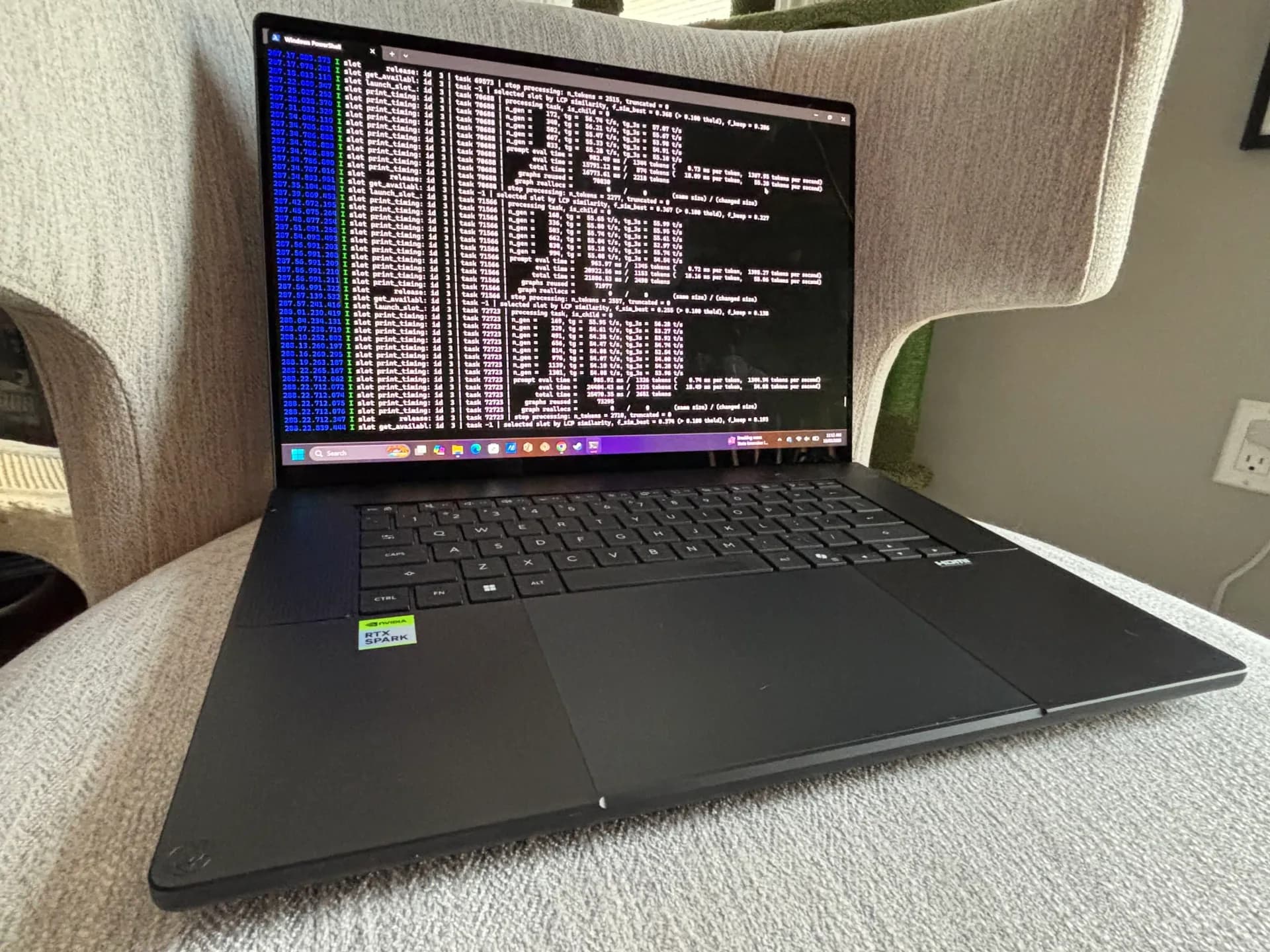
Under the hood, Asus ditched traditional x86 layouts for Nvidia's RTX Spark platform, which pairs an Arm-based Grace processor carrying up to 20 cores with a Blackwell RTX graphics chip packing up to 6,144 CUDA cores. Because both processing blocks tap into a single shared pool of up to 128GB of unified memory, the architecture avoids the bandwidth penalties of shifting datasets across a PCIe bus.
Asus says the hardware outputs up to 1 petaflop of FP4 AI compute. That is enough headroom to execute local large language models carrying up to 120 billion parameters across a 1-million-token context window without handing files to remote server farms. For visual creators, the local silicon handles 12K video cuts and dense 3D scene rendering.
Software support comes preloaded to match the silicon. Asus includes MuseTree for local image creation on FLUX and WAN models, along with StoryCube for media indexing. The company also teamed up with Nous Research to build in Hermes Agent, an autonomous model that executes instructions across local operating system files and programs, alongside native system support for ComfyUI workflows.
OLED Displays and Thin Chassis
Both machines run Asus Lumina Pro OLED panels rated for 1,600 nits of peak HDR brightness, 100 percent DCI-P3 coverage, and a 120Hz variable refresh rate behind an anti-reflective finish. The 16-inch ProArt P16 gets a 4K resolution panel with Nvidia G-Sync support, while the 14-inch ProArt P14 steps down to a 3K panel.
Despite the workstation silicon, Asus kept both laptops reasonably light. The P16 measures 12.9mm thick and hits the scales at 1.77kg, fitting a 99.9Wh internal battery inside. The smaller P14 measures 13.9mm thick, weighs 1.48kg, and houses a 90Wh battery. Both models pack USB4 ports and Wi-Fi 7 wireless connectivity.
US deliveries begin October 16, with international distribution details still to follow.
CDFiled by The Computing Desk
Laptops, desktops, processors, graphics cards and the operating systems that run on them.
More from this desk →
Be the first to comment
Join the argument. No password, just your email or a passkey.