Claude Code can now build websites that don’t look like every other AI-generated site on the web. The change comes via Hallmark — a free, open-source design skill built by Together AI and now integrated into Claude Code, Codex, Cursor, and OpenCode. It launched publicly in late November 2026 and already has nearly 60,000 GitHub stars.
Its goal: kill the AI design monoculture, the purple gradients, the oversized serif headlines, the side-by-side rounded buttons, the tiny uppercase labels above every heading, the newsletter signup shoved at the bottom of every page. All of it. And it does so without locking users into fixed templates. Hallmark gives Claude Code 50 distinct design themes, Dusk, Cobalt, Studio, Atelier, Refract, Ribbon, each with its own typography, color system, texture language, and visual logic.
But it doesn’t just drop a theme onto your prompt. It treats the theme as a constraint set, then reasons through layout, spacing, hierarchy, and responsiveness from scratch. Two sites built with the same Hallmark theme, say, a fragrance studio and an outdoor pool, end up looking nothing alike. That’s by design.
Hallmark also runs sloplint: a three-tiered design checker. Floor catches hard failures, poor contrast, broken mobile layouts, accessibility violations. Reflex flags AI’s habitual crutches: repetitive grid patterns, overused iconography, forced all-caps microcopy. Finish polishes details, consistent hover states, intentional whitespace ratios, typographic rhythm.
It tests across eight screen widths and can even spin up a second agent to review the final output, a human-like QA pass baked into the workflow. XDA Developers tested it head-to-head: same prompt (“build a beautiful, fully functional website for a cozy independent bookstore”), same model (Claude Opus 5.5), same effort level (medium).
One session used Hallmark. The other didn’t. The non-Hallmark site landed in under five minutes. It used the “orange-and-cream” palette XDA says they’ve seen Claude Code default to repeatedly, massive serif headline, “slow reading” italicized in orange, tiny uppercase label above it, two identical rounded buttons side by side. The Hallmark version took just over ten minutes.
It asked four clarifying questions first: about content, audience, purpose, and design direction. Then it built, checked, tested, and reviewed, resulting in a site that looked deliberately crafted, not algorithmically assembled. Hallmark also includes a library of 755 openly licensed photographs, so users aren’t stuck with placeholder images or stock clichés. The skill is invoked explicitly, via /hallmark, and works alongside existing workflows.
It doesn’t replace Claude Code. It reorients it. No pricing, no subscription, no vendor lock-in: Hallmark is MIT-licensed and hosted on GitHub. It’s not a product launch.
It’s a design intervention, one that arrives just as developers grow tired of recognizing AI’s visual fingerprints before they even load the CSS.
ADFiled by The AI Desk
Models, assistants and the companies and chips behind them, reported from what was released and what was claimed, with the difference kept clear.
More from this desk →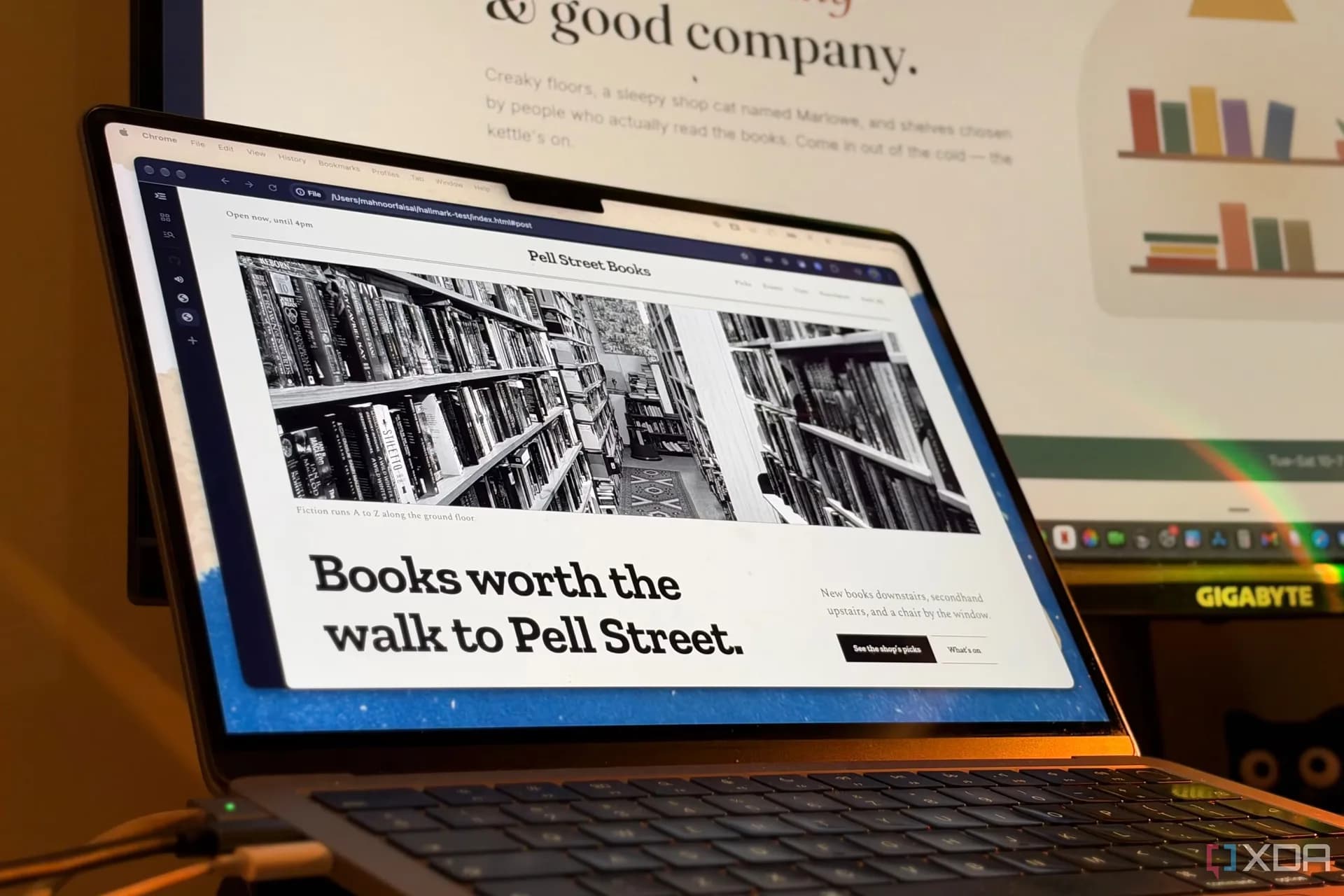
Be the first to comment
Join the argument. No password, just your email or a passkey.