Nvidia's Vera processor can spin up 2,000 software sandboxes faster than AMD's Zen 5 EPYC silicon can boot 1,000, according to fresh benchmark figures published by runtime developer Daytona.
Daytona, an infrastructure platform built to run agent workflows and code generated by machine learning models, measured how server processors cope when flooded with containerized environments. As artificial intelligence models expand into autonomous coding agents, the computational bottleneck shifts. GPUs handle the neural network tokens, but the CPU takes the hit every time an agent needs an isolated terminal, runs a build step, installs dependencies, or manipulates files on disk.
That dynamic turns data center provisioning into a raw density sprint.
In Daytona's evaluation, Nvidia Vera brought 1,000 sandboxes online in 10.8 seconds. Scaling the workload to 2,000 environments took 27.4 seconds. By contrast, AMD's standard Zen 5 server flagship, the EPYC 9755, took 88.4 seconds to boot 1,000 sandboxes — over eight times slower than Vera on that initial batch. The higher-frequency AMD EPYC 9575F fared better, configuring 1,000 sandboxes in 32.3 seconds, yet it still fell behind Vera's 2,000-sandbox timing.
Daytona tested the chips using identical coding tasks distributed across broad sandbox clusters to monitor host behavior before and after saturation. In autonomous development, each agent requires its own isolated filesystem, execution shell, and virtual network. When thousands of agents run at once, standard host operating systems often suffer from process scheduler thrashing and memory latency.
Throughput held steady under load. Daytona logged Vera reaching a peak rate of 13.3 finished agent tasks per second. When the test scaled to 2,000 active sandboxes simultaneously, Vera stayed close to 13 completed tasks per second rather than stalling out under operating system overhead.
For data center operators, boot speed translates directly into rack space and power budgets. Daytona estimated that hitting a capacity target of 1,000 jobs per second would require 15 percent fewer server nodes with Vera than with the EPYC 9755. Against the EPYC 9575F, Vera would need 38 percent fewer physical machines to finish the identical workload volume.
The comparison highlights how Nvidia intends to position Vera against traditional x86 server fleets. While Nvidia previously relied on its Grace chips to pair alongside GPU clusters, Vera emphasizes single-thread and per-core efficiency specifically for the scaffolding work surrounding autonomous agents.
AMD has already moved to counter this segment by shipping Zen 6 EPYC processors, which target similar container density improvements. How Vera stacks up against AMD's newest architecture in independent fleet testing will determine whether Nvidia can turn agentic infrastructure into an Arm-dominated stronghold.
CDFiled by The Computing Desk
Laptops, desktops, processors, graphics cards and the operating systems that run on them.
More from this desk →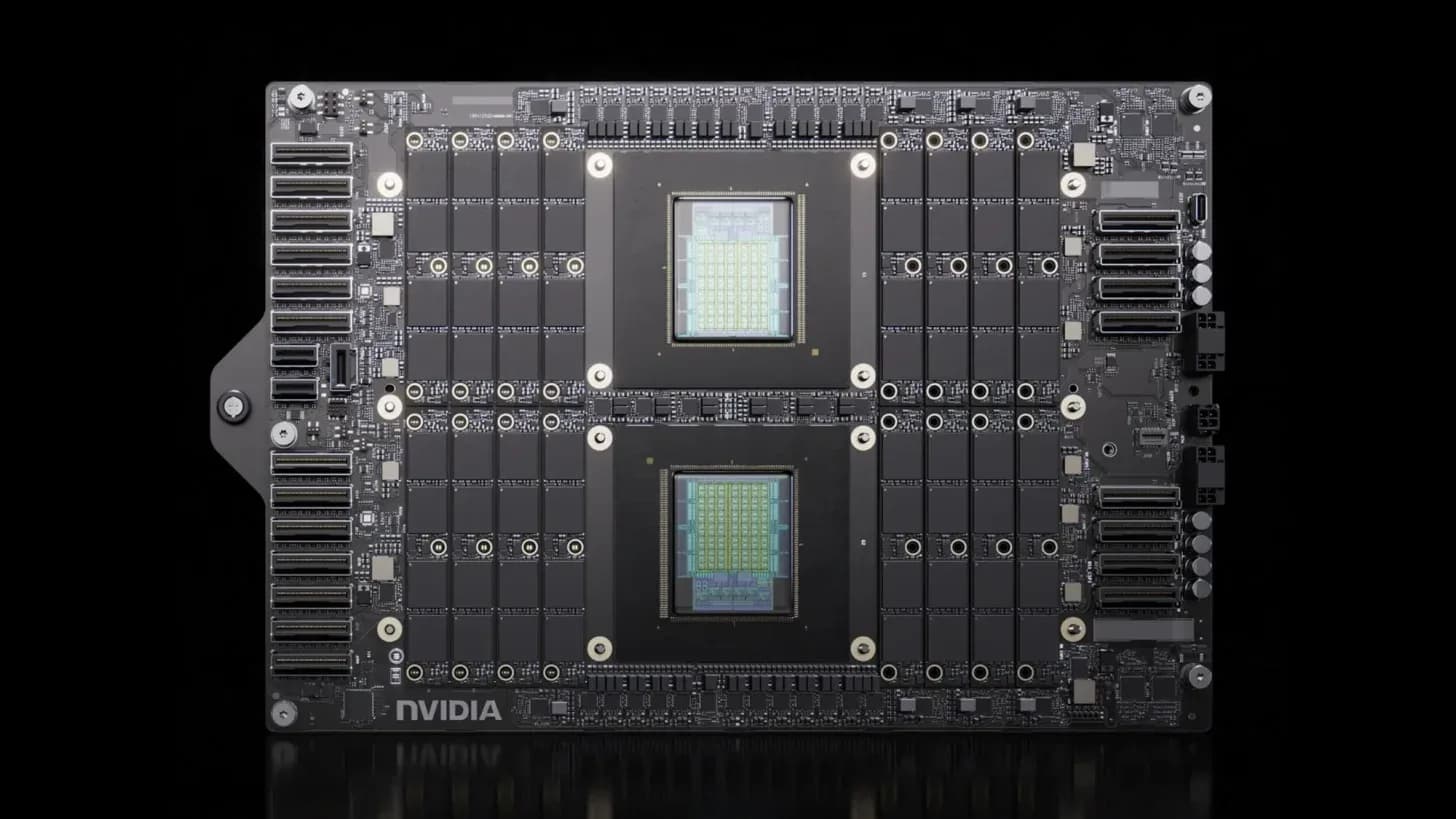
Be the first to comment
Join the argument. No password, just your email or a passkey.