Starlink satellites executed more than 355,000 collision avoidance maneuvers between May 2025 and May 2026. Orbit is becoming crowded at a rate ground radars struggle to parse, and SpaceX wants other operators to stop hiding their flight plans.
Speaking at the 2026 International Astronautical Congress in Turkey, Michael Nicolls, SpaceX vice president for Starlink and president of AI at SpaceXSI, made an open plea for universal trajectory sharing. Specifically, Nicolls urged operators across the globe to publish their ephemeris data, the raw mathematical tracking that maps a spacecraft's exact position, velocity, and orbital path.
SpaceX already releases ephemeris figures for its own fleet. The problem is that many other operators do not. During his presentation, Nicolls displayed a breakdown targeting entities that withhold orbital paths. Russian and Chinese groups topped that list, but Nicolls pointed out that several operators across Europe, Japan, and the United States also decline to publish their numbers.
Low Earth orbit holds over 18,000 satellite payloads as of 2026, with more than 11,000 belonging to Starlink alone. Throw in dead hardware and discarded upper stages, and the traffic looks even worse. NASA documented over 45,000 trackable human-made objects circling Earth in 2025.
Keeping tens of thousands of fast-moving hulls from hitting one another requires precise math. When operators do not exchange path coordinates, avoidance systems have to rely on estimated radar tracks that carry wide margins of uncertainty.
Political friction remains the chief barrier. Military paranoia and commercial trade secrets keep national agencies from disclosing exact positions. Still, direct coordination has happened under pressure. In October 2025, NASA and Chinese controllers coordinated directly to dodge an impending crash, marking the first known operational collision-avoidance effort between the two agencies. Both sides strictly limited what they shared, trading only the bare minimum figures needed to clear the immediate pass.
That piecemeal coordination will not survive what is coming. Chinese network builder SpaceSail intends to put more than 10,000 satellites into low Earth orbit to challenge Starlink directly. If two rival megaconstellations maneuver in the same altitude bands without exchanging real-time trajectory tables, the math falls apart quickly.
SpaceX is leaning on its Stargaze situational awareness platform to automate tracking and dodge incoming space junk. Stargaze is pitched as an orbital safety tool for everyone flying hardware in low Earth orbit, with capabilities that could assist in tracking derelict debris before older spacecraft disintegrate. But automated dodging cannot substitute for knowing where the other side intends to steer next week.
GDFiled by The Gadgets Desk
Audio, wearables, cameras, tablets, chargers and every other device worth carrying or plugging in.
More from this desk →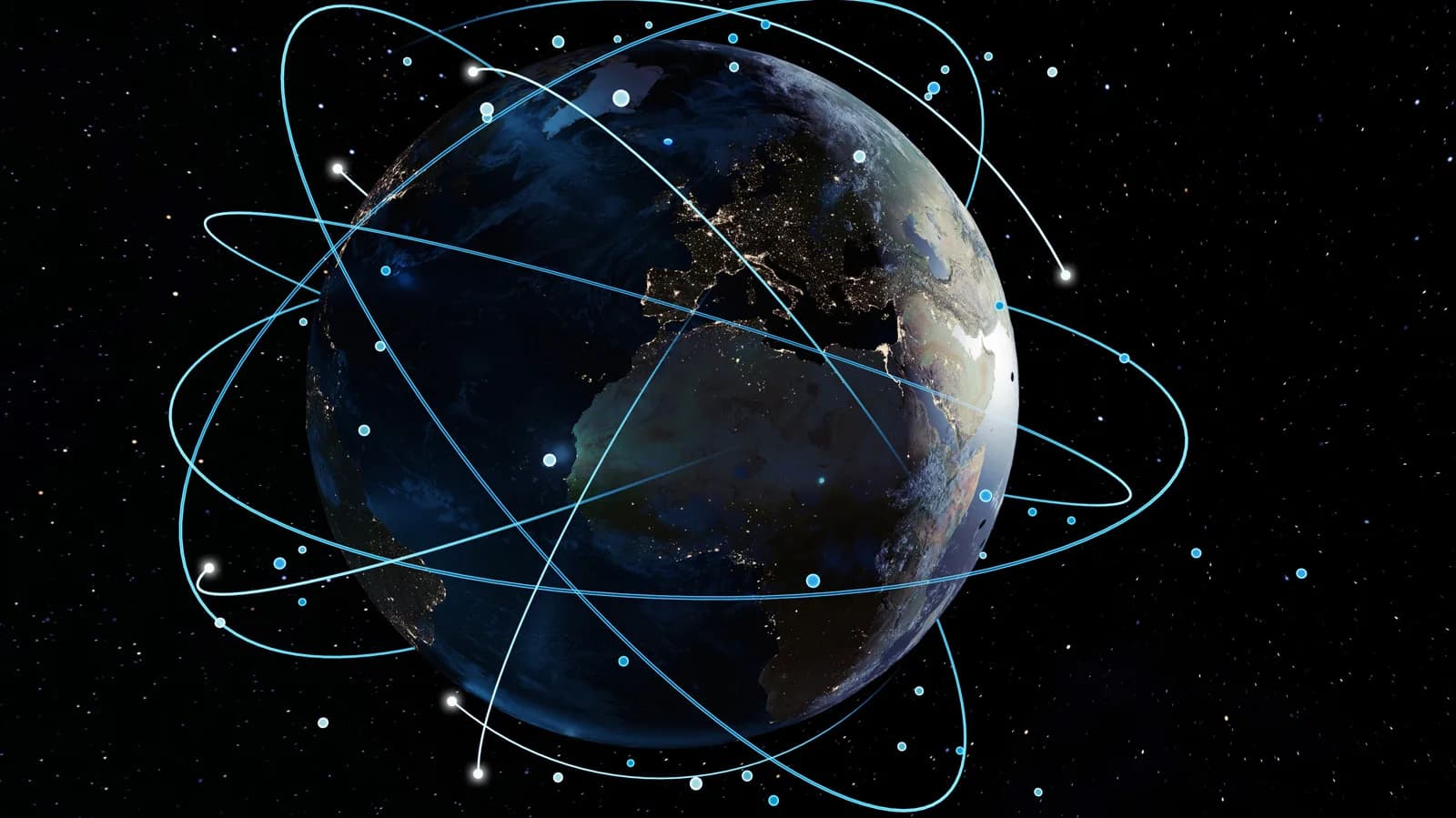


Be the first to comment
Join the argument. No password, just your email or a passkey.