The Samsung Galaxy I7500 — the company’s first Android phone, launched in April 2009, had 8 GB of internal storage. That’s the headline fact. Not 16 GB. Not 128 GB. Eight gigabytes. And of that, roughly 7.6 GB was user-accessible after Android 1.5 took its cut. Today, that space wouldn’t hold Genshin Impact (31 GB) or Fortnite (40 GB). It wouldn’t even hold a single 4K HDR movie shot on a modern Galaxy S26 Ultra. It’s less than one-tenth the base storage of that S26 Ultra. Which starts at 256 GB and goes up to 1 TB. The gap isn’t evolutionary. It’s geological. 17 years. One generation of mobile computing to the next. 8 GB was plenty in 2009. Apps were under 1 MB. Camera photos were 2 megapixels. Streaming didn’t exist on the device, so music, videos, and photos lived on microSD cards. The Galaxy I7500 shipped with a slot for up to 32 GB cards. You popped the back cover, slid the card in, and called it done. But you couldn’t install apps to it. Android 1.5 didn’t allow that. Only Android 2.2 Froyo did. And Samsung never updated the I7500 to it. HTC’s competing Android phones that same year had just 512 MB built-in, barely enough for the OS, let alone anything else. Even Samsung’s own follow-up, the Galaxy Spica, dropped to 180 MB. The Galaxy S. Released in 2010, marked the real inflection: 16 GB onboard, plus microSD. From there, storage ballooned, bezels shrank, ports vanished, batteries sealed, and the idea of ‘enough space’ kept resetting. The Galaxy S26 Ultra doesn’t have a microSD slot. It doesn’t need one. Its base model holds more than 30 times what the original Galaxy could hold in total. The I7500 is now a museum piece. But its specs are still a useful anchor. They show how far the baseline has moved. Not just in capacity, but in expectation. We don’t ask ‘how much storage does it have?’ anymore. We ask ‘how fast can it read and write 1 TB?’ The answer matters, because now, storage isn’t just space. It’s speed, reliability, and integration. The Galaxy I7500 didn’t know any of that. It just held your MP3s. And that was enough.
Samsung Galaxy I7500 specs
Samsung’s first Android phone launched with 8 GB of storage — and that was considered generous in 2009.
By Plugged In
The Gadgets Desk · (2 hours ago)
Reported from
How this story was made
Written by the Hitechreports desk from the reporting credited above, with facts attributed to their original publishers. We do not test devices ourselves; anything about performance, battery life or cameras comes from the outlets that did. Prices are as reported at the time of writing. Editorial policy · Report an error
Filed by The Gadgets Desk
Audio, wearables, cameras, tablets, chargers and every other device worth carrying or plugging in.
More from this desk →Read next
More Gadgets →
Google Play Store Starts Selling Samsung Galaxy S26 Phones and Galaxy Watch8 Devices
Google Play Store now sells Samsung Galaxy S26 phones and Galaxy Watch8 devices—in select regions—alongside Pixel 11 series, Pixel Watches, and Pixel Buds.
Galaxy S26 Ultra $420 off at Amazon
The Galaxy S26 Ultra is $420 off at Amazon US during the final day of fall Prime Day 2026. No Indian price or availability is reported. Deal ends within 24 hours.
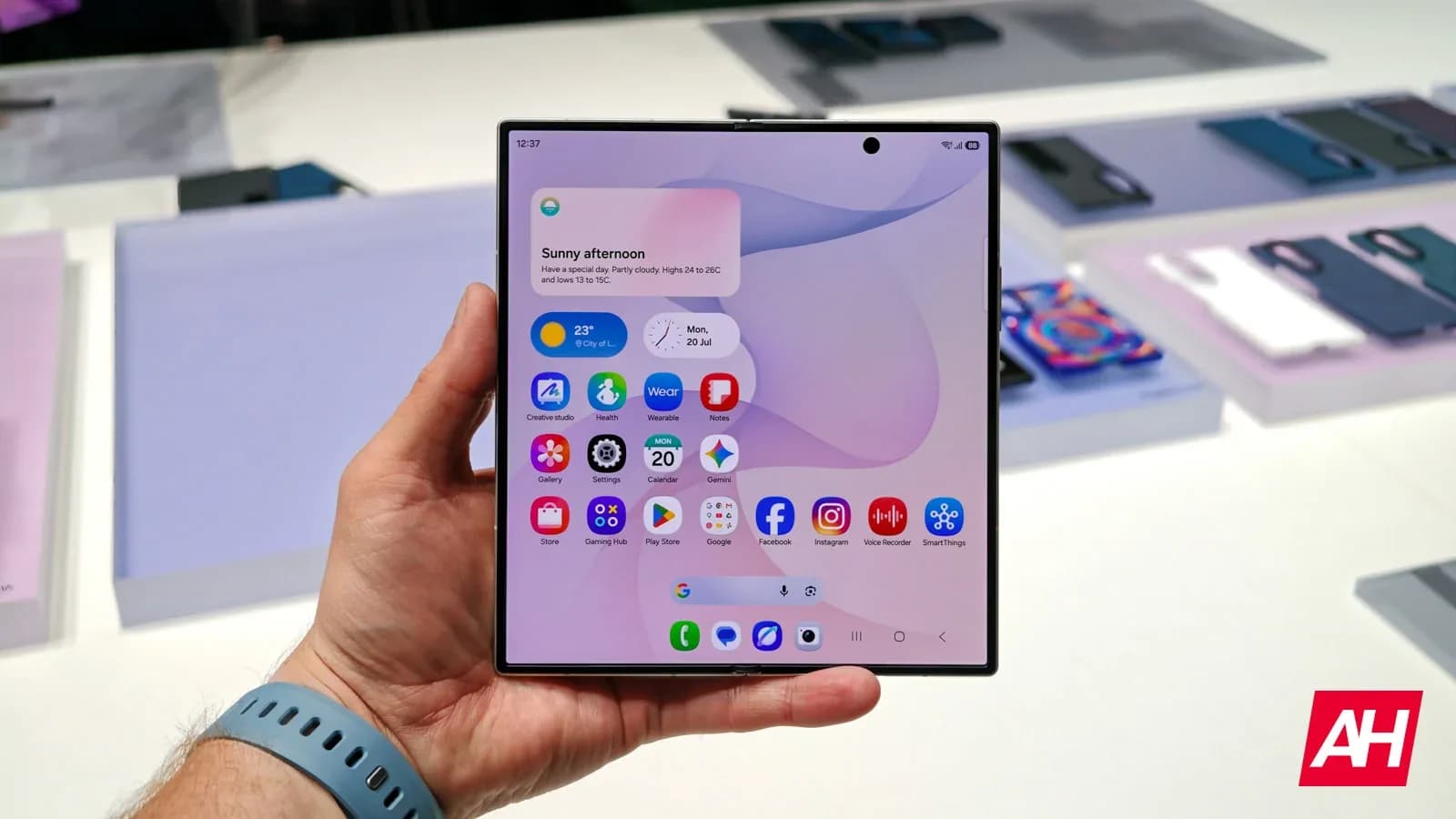
Galaxy Z Fold 8 Ultra October 2026 security update rolling out
Samsung’s October 2026 security update is live for the Galaxy Z Fold 8, Galaxy Z Fold 8 Ultra, and Galaxy Z Flip 8 — rolling out now across Europe and India, with the US and other regions following imminently.
Be the first to comment
Join the argument. No password, just your email or a passkey.