
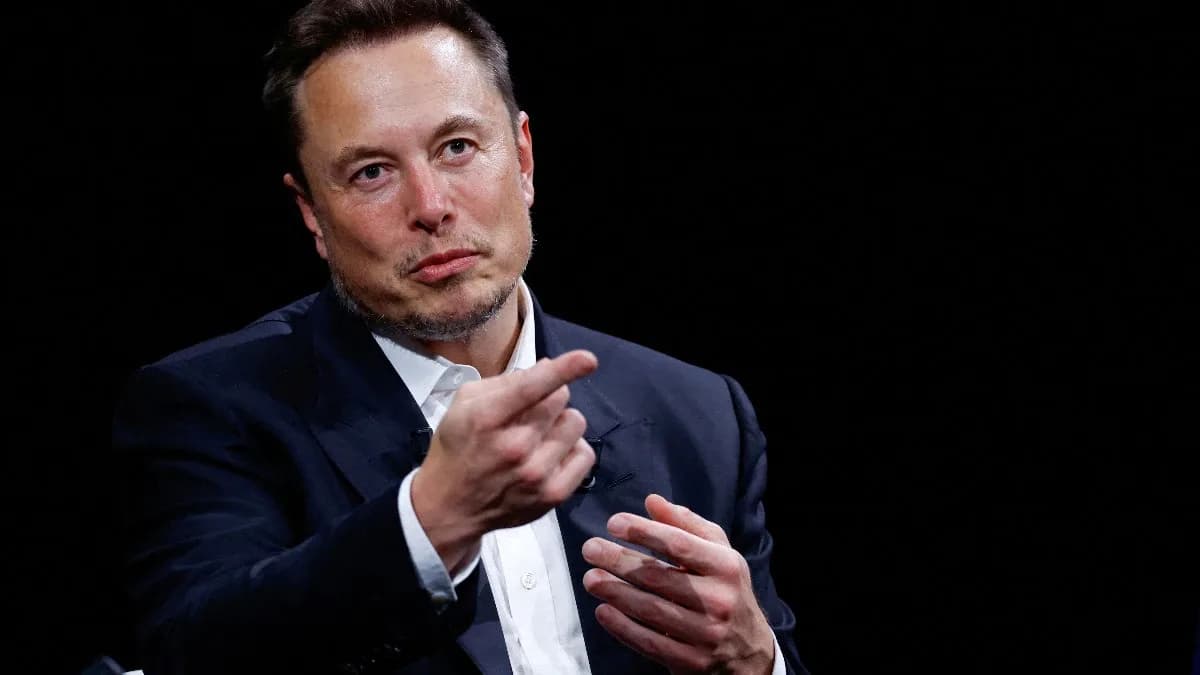
Starlink’s India launch remains on hold — but Elon Musk just confirmed its pricing will have to drop sharply to stand a chance against Jio. In a post on X, Musk said plainly: “If Starlink is too expensive in India, no one will buy it, so SpaceX will need to make pricing affordable.” He made the comment while pushing back on claims that Starlink can’t compete with Reliance Jio’s low-cost mobile and broadband plans. No Indian price, no launch date, no hardware specs, none of those are public yet. What is clear is the constraint: affordability isn’t optional. It’s the entry ticket. And it’s non-negotiable for a market where monthly mobile data plans start at ₹199 and fibre packages hover around ₹699–₹999 for 300GB+ usage. Musk didn’t name numbers, but he did name the competition. And the stakes. Jio isn’t waiting. At India Mobile Congress 2026, it unveiled plans for a 1,600-satellite LEO constellation and 23 ground stations, targeting 600,000 villages, islands, and border areas. That network is still proposed, not operational. And both Jio’s and Starlink’s projects remain pending final security clearance from the Indian government. The government has denied favouring Jio. Reliance has not responded to Musk’s latest remarks. Meanwhile, the real bottleneck isn’t tech, it’s policy. Until clearance arrives, Starlink can’t sell terminals, activate service, or even quote prices in rupees. So when Musk says “affordable”, he’s not announcing a discount. He’s signalling a condition: no launch without local pricing calibrated to India’s reality. Not Texas or Tokyo. That means Starlink Mini, Starlink Mobile, and any future India-specific hardware will be judged first on cost, not capability. Next step? Clearance. Then, and only then, the numbers. Not before.
Starlink internet in India: Price, launch date, and Jio competition explained
No Indian price yet. No launch date. But Musk just confirmed Starlink’s India entry depends entirely on cutting costs to match Jio’s ₹199–₹999 range.
By Market Close
The Tech Business Desk · (4 hours ago)
In this story
Reported from
How this story was made
Written by the Hitechreports desk from the reporting credited above, with facts attributed to their original publishers. We do not test devices ourselves; anything about performance, battery life or cameras comes from the outlets that did. Prices are as reported at the time of writing. Editorial policy · Report an error
Filed by The Tech Business Desk
Big tech, startups, earnings, regulation and policy — the decisions that shape the products.
More from this desk →Read next
More Tech Business →
Elon Musk Accuses Mukesh Ambani While Starlink Remains Stalled in India
Starlink’s India launch remains stalled as Elon Musk publicly accuses Mukesh Ambani of obstructing competition — a claim Indian regulators have flatly denied.

SpaceX Pushes Foreign Rivals to Share Orbit Data as Starlink Satellites Multiply
SpaceX is urging global satellite operators to publish ephemeris flight data after Starlink satellites completed over 355,000 collision avoidance maneuvers across low Earth orbit in a single year.

SpaceX Buys Nationwide 800 MHz Spectrum, Clears FCC Hurdle for 15,000-Satellite Mobile Network
SpaceX has bought up to 14 MHz of 800 MHz low-band spectrum from Grain Management — former T-Mobile assets acquired in the Sprint merger — to build a terrestrial mobile network that will run alongside its satellite-based Starlink Mobile service.
Be the first to comment
Join the argument. No password, just your email or a passkey.